
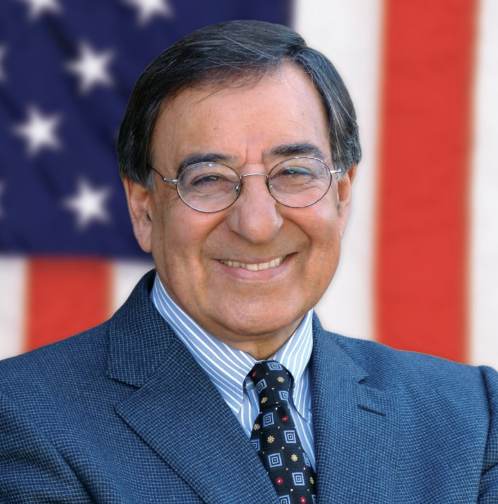
Leon Panetta is an American public servant who has held some of the highest positions in the U.S. government. He served as Director of the Central Intelligence Agency from 2009 to 2011, overseeing the operation that led to the killing of Osama bin Laden in 2011, and later as U.S. Secretary of Defense from 2011 to 2013 under President Barack Obama.
This interview is part of an oral history project undertaken by Alex Bower-Leet in affiliation with the University of Kentucky.
I’m the son of Italian immigrants. I was born and raised in Monterey, California. Went to school at the University of Santa Clara, both undergrad and law school. I also got my commission in the Army there through ROTC. Served two years in the Army after that. And then when I got out of the Army, went back to Washington as a legislative assistant to a US Senator from California. That led to my becoming the Director of the Office for Civil Rights. that was responsible for enforcing the Civil Rights Act, particularly in Southern schools. I then worked in New York City as an administrative assistant, came back to California, ran for Congress in 1976, served in Congress for about 16 years, serving primarily as chairman of the House Budget Committee and working on proposals to reduce the deficit, which were successful.
Became OMB director for the Clinton administration, was asked to be director of OMB by President Clinton, and then ultimately became his chief of staff. After serving as chief of staff, came back to California, started the Panetta Institute, where I’m at now, and then was asked by President Obama to become director of the CIA. And he then appointed me after that as Secretary of Defense. And now I’ve returned back to the Panetta Institute.
Highlight of Service
My favorite job I was in was being able to serve in Congress when it worked. At the time I was in Congress, Republicans and Democrats worked together. We were able to get things done, both for the country as well as for my own district. And the camaraderie and the sense of trust that existed was really a unique time in terms of the Congress. And so that was really a lot of fun to be a member of Congress in the days when it was working and we were getting along together and really focusing on legislation as opposed to politics.
Life Before 9/11
I had returned back to my home area of Monterey after serving as Bill Clinton’s chief of staff. After his first term, I returned here to California. And my wife and I began the Institute for Public Policy in the late nineties, and it is dedicated towards trying to inspire young people to live lives in public service. And so we worked on that, developed a curriculum for the Institute and also had a number of programs like a lecture series that were part of what we did. And I was largely doing that.
I was also chair of what was called the Pew Oceans Commission because I’d worked on ocean issues. I developed legislation to create the Monterey Bay National Marine Sanctuary. And so I was asked to chair what was called the Pew Oceans Commission. And actually, in that capacity, I was in Washington on 9/11, and we can talk more about that. And I was also named to serve on what was called the Iraq Study Group, which was a group that was established by Congress to look at the situation in Iraq and make recommendations to the then Bush administration as to what steps should be taken. It was a great commission. It was chaired by former Secretary of State Jim Baker and also former Congressman Lee Hamilton. So it was a great experience. And that was kind of my life working both in academics as well as in government in one way or another. And I was doing that. As a matter of fact, as I said, I was in Washington as the Pew Ocean Commission chairman when 9/11 happened. So that was kind of my life prior to 9/11.
Response to 9/11
I had gone back to Washington to brief members of Congress on what the Pew Oceans Commission was doing since I was chairman. And I and some of my members of the commission, I had a meeting at the Cannon Office Building on Capitol Hill. That began, I think, around 7:30 a.m. that day. And we began the briefing with members of Congress who were interested in finding out what the Commission was doing on ocean issues. I think we had probably about 10 or 12 members of Congress there at the meeting that we were briefing. And I had a commission member who had an office in New York City. And at one point during the meeting, around 8 o’clock, she leaned over to me and said that she’d just gotten a message from her office that a plane had gone into one of the Trade Towers. And I think both of us at the time assumed that it was a horrible accident of some kind that had occurred.
And so we continued with the meeting, although everybody I think had heard the news that a plane had gone into the Trade Tower. But then soon after that, she came back with another message that another plane had gone into the second tower, and that it was pretty clear that the United States was under attack at that point. I told the members of Congress that we were going to conclude the meeting. and that they should probably evacuate as quickly as possible from The Hill, because I was concerned that as a result of what had happened in New York, that Washington itself might be targeted as well, particularly the Capitol.
And so everybody basically got out of there quickly, including myself. I jumped into a car and was driving away from the Capitol as quickly as I could. And it was at that point that one of the planes hit the Pentagon. I’ll never forget it. I was going down, I think it was Constitution Avenue. And I looked over to the left and saw the smoke coming from the Pentagon as a result of the plane that had hit the Pentagon and obviously continued to follow the events of the day. More importantly, I was trying to figure out how to get back home to California, because it was clear that all the flights had been grounded.and it wasn’t going to be easy to be able to get a flight back to California. So I went to the office of a dear friend who had been my campaign manager in California in my various races and continued to work for me on various issues. And I told John Francine, I said, “I’ve got to try to see if I can find a way to get back home.” And what I did was I called Hertz in Washington, and sure enough, they had a car that was available, and I was able to rent the car.
And that afternoon, I jumped into the car and started driving back to California, which was actually a really interesting experience because as I was traveling back across the country, I could see how communities across this country were responding to the 9/11 attack. And there were signs going up, “USA” signs going up, “God bless America.” And you could see the country kind of pulling together in the face of that horrible attack. And it was encouraging to be able to see America responding that way. I got back to California. It was a pretty fast drive. I think I got back in about two days, which was driving pretty quickly to get back home. But I was glad to be able to get back home. But I never forgot the memory of what I saw happening across America.
After 9/11: Becoming Director of the CIA
I got back to California, obviously continued to do the work that I was involved with, with the Panetta Institute, and also continued to work on the Pew Oceans Commission. I think the Iraq Study Group was operating then as well. We did the formal report to the President. I think I went back to Washington to present that report to President Bush. And then after the election in 2008, I got a call from Rahm Emanuel, who had worked for me when I was Chief of Staff to Bill Clinton and also had worked with him in other capacities. And Rahm had been named Chief of Staff to President Obama and called me to say that the President was interested in appointing me as Director of the CIA, which was a little bit of a surprise.
I mean, I’d been an intelligence officer in the Army and obviously had worked with intelligence as Chief of Staff and in other capacities. But it kind of came out of left field that they would ask me to become a Director of the CIA. The president, it was, I think, within a week or so, the President himself called and said that he wanted me to become a Director of the CIA. And I asked him, I said, “Look, I’m honored that you would ask me, but my background is on budget issues, helping to balance the federal budget during the Clinton administration, and had worked on ocean issues, obviously.” And he said something I’ve never forgotten, which is, “You know, I need somebody who can help restore the trust of the CIA with Capitol Hill and with the country.” Because the CIA had gone through some difficult times, they became very politicized. And so the President said something else, which was really important. He said, “I really want to have somebody who can go after Bin Laden,” who was obviously the primary individual responsible for the attack on 9 /11.
And you know, as a result of that, I agreed to become Director of the CIA. And almost from the moment I walked into the CIA, I was pretty much consumed with responsibility regarding the War on Terrorism. The CIA played a very big role going after al-Qaeda, the al-Qaeda leaders that were responsible for 9/11. I remember going into a meeting with the President early on, soon after I’d been approved by the Senate. And the President again emphasized the importance of going after bin Laden. And I immediately went back to the CIA and tried to pull together a task force that would be responsible for nothing else but going after bin Laden and at the same time was doing operations, responsible for operations, going after the leadership of Al-Qaeda in the tribal area in Pakistan. That’s pretty much where they had settled. And we were doing operations that basically targeted those individuals.
So, you know, I really assumed a lot of responsibility in the War on Terror at that point as CIA Director, and obviously continued to do that work. And then we were able to get some very important intelligence that indicated who the couriers were for bin Laden. We were able to get a name, identify the individuals, and we were able then to do surveillance on them and followed them to a compound, a home in Abbottabad. And as soon as we saw that home, it really was clear that we had some pretty good evidence on the possibility of where bin Laden might be because the home was three times the size of other homes. It had 18 foot walls on one side, had 12 foot walls on another side, barbed wire at the top. It was a mysterious family on the third floor of that compound that never came out, never came out. And so obviously it raised a lot of interest that it could very well be a hideaway for bin Laden and his family. I told the President of the United States, he stressed that we had to continue to do surveillance on that compound, that home, which we did. We basically did 24/7 surveillance over that place constantly, trying to see if we could determine whether bin Laden was really there. We were not able to get 100% information that bin Laden truly was there.
But there came a time, I think it was after five or six months of surveillance, that the President thought we had better develop an operation to go after that compound because he was concerned that the information might leak. And so I went to Bill McRaven, who was head of Special Forces. He developed several recommendations, one of which was to take two helicopters into Pakistan at night and have two teams of SEALs repel down onto that compound and go after whoever was there. And hopefully, it would be bin Laden. We obviously worked on that, and practiced the approach, brought it to the National Security Council with the President and there were some that were very concerned about whether or not we should do it not having 100% information that Bin Laden was there but the President asked me and I said “You know Mr. President, I’ve had an old formula I used when I was in Congress when I faced a tough decision that I pretended I was I could I was I was going to. I was telling an average citizen of my district, ‘If you knew what I knew, what would you do?’ And in this case, if I told the average citizen of my district we had the best evidence on the location of Bin Laden since Tora Bora, I think the average citizen would say you have to do it.” And that’s what I recommended to the President.
He didn’t make a decision at that point, but the next morning I got a call from the White House that he was prepared to go ahead with the commando raid. And I gave the orders. It was a covert operation, so the CIA was in charge. I gave the order to Bill McRaven to have the SEALs conduct the operation. I think it was within a couple days, the operation itself was conducted and went there. There we followed the helicopters in. We had drones following the helicopters all the way into Pakistan at night. It had been hot that day and the heat from the ground came up and stalled one of the helicopters and the helicopter wobbled and the pilot did a great job. He settled it down and I remember I was in communication with Bill McRaven who was in Afghanistan, I said “What the hell is happening?” and he didn’t miss a beat he said, “Don’t worry we have a backup helicopter coming in we’re going to proceed with the mission we’re going to breach through the walls and we’re going to conduct it.” I said “God bless you” and they did that, eventually they were able to go into the house and they found Bin Laden and brought him to justice.
And I remember sending that message to the White House. And the President obviously was very pleased that a very risky decision by him had proven worthwhile. And we were able to do that. And I have to tell you that one of the things that first occurred to me, as we were obviously you know, felt really satisfied about what we had done in the mission. But I began to think that in many ways, what we did was to bring justice to the families of the victims of 9/11 by virtue of having gotten bin Laden. And I remember getting a call the next day from one of the family members who thanked me on behalf of their relative who got killed, and thanked me for what we had done. I’ve never forgotten that, because I think we sent a message to the world that nobody attacks the United States of America and gets away with it.
How We Should Honor 9/11
I think it’s really important that the American people never forget what happened on 9/11. Because in many ways, look, it was a brutal attack on the United States. And, you know, we’d never seen anything like that happening until Pearl Harbor and then 9/11 happened. And it was a wake up call because we suddenly realized that there were terrorists out there who are prepared not only to attack the United States, but to continue to attack the United States and continue to be a threat. And by the way, terrorism continues to be a threat to our national security. So it’s really important that the American people not forget what happened and that almost 3,000 of our fellow citizens lost their lives as a result of what happened. And that the United States owes it to those who died, but more importantly, owes it to our country to make sure that it never happens again. I know memories fade. I know there are a lot of kids now that have no idea what 9/11 was all about. But I think it’s our responsibility to make sure that people do not forget and that we remember not only the sacrifices that were made but remember the importance of being able to keep our country unified and safe and make sure that no enemy ever again can just blatantly attack our country.


 Previous