
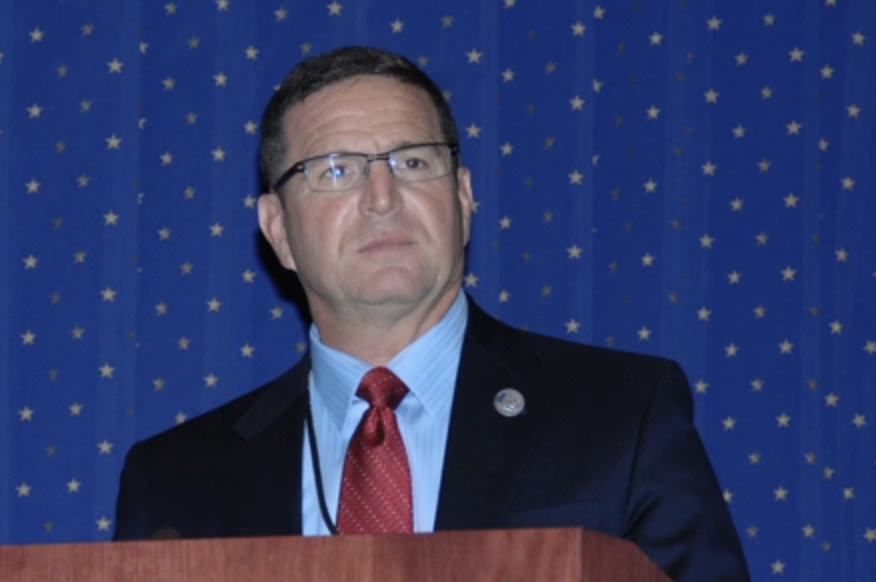
Lt Col Rob Grunewald, a retired Army lieutenant colonel and Pentagon civilian, reflecting on his military career, his survival and rescue efforts during the September 11, 2001 attack on the The Pentagon, and the lasting personal and professional impact of that day.
This interview is part of an oral history project undertaken by Alex Bower-Leet in affiliation with the University of Kentucky.
My name is Rob Grunewald. I am in my mid-60s at the current moment. I was born in New York. I grew up most of my life in Pennsylvania, spent some years in New Jersey. When my parents moved, I went to school at Shippensburg University of Pennsylvania, where I received commission in the Army and ROTC in 1982. I joined the Army in January of 83 as a military policeman and took assignments all over the world in Europe and in Southwest Asia, in Alabama, Washington, D.C., and moved around my military career. I eventually retired as a lieutenant colonel after 22 years on active duty and became a government contractor in the Washington, D.C. area. And after that time, I became a government civilian, working in the Pentagon for a good many years after that. And then I retired for the final time back in I believe, 2022. So I’ve been retired for about 3 years now, and I’m doing some part-time work on the side, totally divorced from the government. In my spare time, I’m a docent at the Pentagon 9/11 Memorial. I also am a high school basketball referee and a college high school football clock operator for the local schools. So I try to keep busy in my retired time.
I was born in Jackson Heights, New York. To tell you the truth, I don’t know a lot about it. My grandparents lived in Brooklyn for a good many years. I am a first generation American. My grandparents literally came over on the ship to Ellis Island and that type of thing back in the day. So I grew up in the typical 1950s, 1960s type. So I am a first generation American..
Life Before 9/11
When you join the military you stay at locations for two, three, four years and they move you around as you get promoted to balance out your career to give you some jobs in the field, to give you some jobs as staff workers, to give you some jobs at headquarters, and they move you around to round you out as an officer. I spent some time at Fort McClellan, Alabama, first for some schooling, and then I went over to Germany as a military policeman second armor division forward and a great great stop for a young second lieutenant. Then I came back to the MP school and now I was in the field with an armored unit my first day, my first assignment in the military. And then I transitioned to the schoolhouse. So I’m getting, again, that roundedness of the differences between it. So I went to the schoolhouse and I was a company commander for a while there. And then the Army has a decision point that you make in your career, whether you stay what they call single tracked as a military policeman or you broaden your horizons and take a dual track. And I took a dual track as an IT officer.
So once I went to information technology school at Fort Gordon, Georgia, then I went on my first information technology assignment in Washington, D.C. at the Defense Intelligence Agency. And The DIA is one of your lesser known organizations as compared to the CIA or the FBI or the NSA. But the DIA was a very interesting assignment, global security and those kinds of things. And so I was very impressed by that. And then after that assignment, at the DIA in Washington, D.C. Then I went back to the military police field for the next three years and went back to Germany. I went to the headquarters of the U.S. Army Europe Provo Marshal in Mannheim, Germany. And then I was deployed for a while to Bosnia and Hungary and Kosovo. And I was also transferred to Bamberg, Germany where I was a battalion executive officer. So I was the second or third in command of a military police unit that had about 700 people.
During that assignment, I came down on orders, an executive order from President Clinton to report back to Washington, D.C. as we were going to do some declassification of government documents. And that was a very cool assignment now back in DC. And then after that, my next assignment was back in the Pentagon. And I went to work for the Army G1. And when I was working for the Army G1, and the G1 is the personnel officer. So I worked for the senior personnel officer in the United States Army, who’s in charge of policies, procedures, rules, and regulations for all of the Army everybody assigned to the Army. When it comes to moving and housing and training and school and everything, that’s what they do, assignments, that’s what they do. So that was a very cool assignment.
And then the plane hit the building, of course, and everything really changed right there for me and for everyone else in the world, especially those of us that were affected by that. And then my career, because of some of the accolades that I got for my actions, my career kind of took a little bit of a change for the better. However, I decided at that time it was time to get out of the Army because I didn’t want to continue to move around the world with my family in the situation that it was. I had two young boys, so I decided I was going to get out of the Army in Washington, D.C., and that’s where I’ve gotten those subsequent jobs. And I’ve been fortunate to live here for over 20 years now, and I haven’t moved in a few years, thankfully, because that is always a challenge. So that is my Reader’s Digest in a nutshell career. I had a very successful career in my mind in the Army. I didn’t go as far as I could have or should have or might have because I elected to get out. And I am happy in my skin because the Army was one of the greatest things that happened to me.
A Desire to Serve
Actually, my grandfather, I told you earlier, I’m a first generation American. My grandfather served in World War I as a German cavalry scout. And he fought in the First World War and actually received the Iron Cross. And then my father came over to this country in the 1930s from Germany. Being German and being Jewish in the 1930s was not the best thing for career and life advancement. So my grandmother smelled a rat. And in the 1930s, she decided that her and the family were going to leave Germany and come to the United States. And a lot of her relatives didn’t believe that. And a lot of her our relatives died in the concentration camps so my relatives came over to this country in the 1930s and my dad was about 11 or 12 and then six years later he was drafted into the Army as an American 18 year old and went to fight against the Germans in World War II so he spent some time back in Germany so I had some military in my background.
And when I was in college in my sophomore year, I was undecided of what my major was and what I wanted to do in life. I guess it’s normal for a lot of teenagers and young adults to not know, you know, what do I want to do for the next 40 or 50 years? And we were in a sociology class and the topic of the Vietnam War came up because it wasn’t that far ago, because now we’re in the early 80s. And somebody said, if there was a war, I’d run to Canada. And I literally stood up in class and said, why don’t you leave now? OK, if you’re not willing to fight for your country and what we stand for, you know, don’t wait for an armed conflict to leave. If you don’t think that we’ve done anything for you, you know, you can get out now. And then I talked to my dad and he said, look, you know, the military is one of those things. Why don’t you try it? There’s no commitment to it. You can go to Fort Knox. You can go to basic camp for ROTC people. And if you like it, you stay in. And if you don’t, you don’t. So I kind of liked it. And I came back from Fort Knox, Kentucky, and I joined ROTC. And I went to Fort Bragg, North Carolina the next summer. And then the Army, in their ultimate wisdom, offered me a scholarship. So they were going to pay for my tuition and books for the next two years, my junior and senior year. And they were going to give me a little stipend, which in today’s money is not much. But I said, hey, look, four years of my life, I can certainly give up to serving in the military. It keeps me young, keeps me in shape, keeps me out of the house. So I decided to accept the scholarship and stay four years in the Army and four years turned into 22 and a half. And it was a great thing. I learned A lot. I know a lot of great people. There’s really no place in this country I can’t go where I know somebody from an assignment somewheres.
And Christmas time, is great because I hear from all of my military buddies and everybody I know, literally from all over the world and similar to going to college or joining a fraternity or something, there is a brotherhood of the military and the civilians, really There’s really nothing that they can relate to about the fighting for your brother that’s next to you and the camaraderie and the willingness to to die for what you stand for and to protect your brother. So the Army was good to me. I got a little banged up and you know, so the VA is trying to take care of me as best they can. But it was one of the better things I’ve done in life. Yeah.
And one of the things that I regret most in my life is not getting to know, I was a young kid and not getting to know my grandparents more and interviewing them and talking to them like this and getting their story and learning a little bit more. I was too young to appreciate it. And now they’re long since gone and all of their stories about the relatives and things like that, I wish I knew, I don’t.
The firefighters, the police, the military, it’s a different breed of people. And look, it’s not for everybody. It’s not. You know, I can compare it to my basketball officiating. That’s not for everybody. You know, your job is to go out there and do things very generically and look at the game because you don’t care who wins. But everybody else is yelling at you and insulting you and screaming at you. And you know, as a military policeman, I was in incidents like you see on TV. You know, and I know we’re diverging from the subject a little bit, but I understand. When a policeman is at a traffic stop and all of a sudden something happens and he discharges his weapon. And you hear the fact that he discharged his weapon eight times. And everybody says, oh man, that’s overkill and it’s abuse of power and blah, blah, blah. Let me tell you something. When a police officer goes for a traffic stop and opens his car door to get out, his heartbeat, his respiration, his everything just absolutely escalates. And it doesn’t matter whether you, behind the wheel is an 85-year-old guy. It’s just, all right, I don’t know what’s gonna happen. It could be somebody. So just getting out of your vehicle, everything on you ramps up, your respiration, your heartbeat, and everything like that. And then when something happens, whether it be the taser or the kicking or the hitting or something, or discharging a weapon, your adrenaline is just so almost out of control. And so unless you’ve been in that situation, you just don’t understand. You just don’t.
And being in the military, and you know, I give the example, and you’re a bit of a historian, I’ll take it. The first Iraq war, okay? We marshaled our troops, in Saudi Arabia and Qatar and all that stuff. And then the command was given to attack. And the armored units started rolling across the desert. And we have a saying in the military: Everything’s fine until you cross the line of departure. And once you cross the line of departure, all the practice you’ve done, everything goes to heck in a handbasket to be nice. It just goes to heck. So you cross the line of departure, you’re in these tanks, you have hundreds and thousands of people, and you’re going to do your mission. And the first thing that happens, is the bad guys start burning all the oil wells, right? I don’t know that anybody planned for any of that. This is just like the terrorists and everything is always one step ahead of us, whether it be cyber, whether it be physical security, whether it be operational security, the bad guys are always just a little bit ahead of us in what to do. So, you have this tanker, this 25 or 30 year old guy crossing into the desert ready to do battle. And all of a sudden, all the oil wells are burning. And he calls up and he says, look, I just crossed this. What the hell do I do? Everything’s on fire here. And the answer is, you know? And I always refer to it as in the game show Jeopardy. I’ll take all the oil wells that are burning for 100, Alex. You know, this is one of those things. And unless you’ve been in that situation where you get out of that police car and you don’t know what’s going to happen, or you are rolling into combat and you don’t know what’s going to happen, or you’re a firefighter and you go into a building that’s on fire and you don’t know what’s going to happen, these are things that regular folks don’t understand.
Because when I get asked the question to this day and someone is under pressure or perceives they’re under pressure and I’m just calm as a cucumber and they say, how can you be like, I said, is anyone in harm’s way? Is anybody going to die? Okay. All right. So, so relax. This isn’t, it may, it may seem important, but, but really in the scheme of things, is it important? Is it important that there’s a cleanup on aisle one? You know, is it important that there is something going on and traffic is really bad? You know, is it important that, you know, the kids aren’t going to school today because it’s snowed out? It’s just not that big a deal in the big scheme of things because, you know, when I worked in the Pentagon, I worked IT at the Pentagon for the Department of Defense, the Chairman of the Joint Chiefs of Staff and all the military services around the globe at the head of DOD. And I would tell the people that were coming into our organization, you know, you can be a database administrator, you can be a system administrator, you can be an IT clerk, you can be a security analyst. If something goes wrong, with what we’re doing in the Pentagon soldiers and sailors and airmen and Coast Guardsmen and Marines and guardians can be in harm’s way, and we can’t allow that.
You know, the difference is if Amazon’s website goes down for a minute, they may lose tens of millions of dollars. If Zoom goes down right now, you and I will be frustrated, but we will start over again. And no harm, no foul. If I’m in the Pentagon and we have a router or a hub or something that goes out, there can be people in harm’s way that could die because of our mission. So it’s a different mindset when you’re in the military or fire or police as to you know, are you an accountant and you forgot and somebody owes a lot of money, you know, or you’re in retail and, you know, the power goes out and you’re going to lose thousands of dollars in produce. There’s a difference in the levels of concern and the heightened security when you’re in the military or fire or police force.
And I was a captain in, like I said earlier, when I worked at the DIA. And somebody from the senior executive service, which is equivalent to a general officer on the civilian side, called me into his office because he was working on an e-mail. Now, when I’m talking about in the early 1990s, all right, now, e-mail was not like it is today. So he was working on an e-mail, and there was a hiccup. There was a glitch in the system, and his e-mail went away. And it wasn’t backed up like we know it was today. It wasn’t in draft like we know it was today. It was G-O-N-E gone. And he wanted a head to chew. And I was your guy. And I walked to his office with my technician, and he just ripped me a new one. And I just said, yes, sir. Yes, sir. Got it, sir. Okay, sir. And we got out of the office and my GS-13 said to me, why did you let him talk to you like that? And I basically said the same thing. Look, is anybody getting shot at? Is anybody getting injured? Is anybody getting hurt here? Okay. He wanted someone to vent on. I’m your guy. Knock yourself out, beat your face. I’m going to go about my work, you know, later on. So he needed a place to vent and I’m your guy, but in the scheme of things, okay, do it over again.
And when I am a basketball official and I’m training basketball officials, or when I’m a basketball official and I’m on the court watching what the youth do, I always have to take in my mind, look, these are 18-year-old kids. These are 17-year-old kids. These are 15-year-old kids. What were you like when you were 15? Oh, I was worse than any of them. All of them combined. Okay, so when a kid does something stupid on the basketball court, I can’t think of it as so heinous and said, he’s 18 years old. He’s showing off whatever it is that he or she is doing. And I probably would have done it too. It’s just the thing. So their experience level, and it is important to them. I don’t want to minimize any of that, but they’ll grow into the fact that in another 40 or 50 years, they’ll look and go, nah.
9/11 Experience
So the first thing we have to remember is this was a lot of years ago. And to set the stand, to set the scope and we always do this when we’re at the Pentagon Memorial and we’re briefing visitors. So to set the stand, the expectations and the background, you have to remember that news reporting and technology isn’t what it is today. Okay. So we didn’t have cell phones, we didn’t have Fox and CNN and ABC and all of those news, NBC, CBS at all of these places all over the globe. It was, it was different. The interweb as we know it today, uh, doesn’t exist as it does today. E-mail is in its infancy. So communication, while good, is not instantaneously like it was back then. So when we’re working in the Pentagon, it’s a normal day for us. It’s a Tuesday. The Pentagon is a huge building. It covers 35 acres. 26,000 people work there on any given day. It’s the largest low-rise federal office building in the world still today. So we are working in the building and it is a normal day for all intents and purposes.
And when the attacks started happening in New York, we had no idea that it was going on because even if you had, and the newspapers were, and the news, I don’t want to, get you wrong, the news was covering it. NBC and ABC, you know, the Today Show with Matt Lauer and Katie Couric, they were covering the news as it was happening. But we’re working in an office building. We don’t have access to television sets, which we can sit around. We don’t have, we’re working, you know, on what we’re supposed to be working, policies, procedure, rules, regulations, information technology, systems automation. We’re doing our jobs. We don’t have this information coming into us. So we don’t know in our particular section of the Pentagon what’s going on in New York. Now, other areas may know about it, but, you know, New York’s a couple of hundred miles away, 100 miles or so away. So, you know, we got to go. So at this time, it’s a Tuesday and we go into a meeting that we have every other week, of the executive officers of all of the people that work in the Army personnel office. So you have your policies and procedures, you have your administrators to the general, you have your information technology, you have your operations section, you have your training section, and we have several hundred people in the personnel office for the Deputy Chief of Staff of Personality Army, who is a three-star general. And we take our job very seriously. But we’re administrators. This is what we do.
We’re working on, you know, leave and earnings statements, you know, with the finance people and what happens when people have a permanent change of station and what happens when people retire and what happens when somebody needs promotion and who goes to school and who goes to training. Those are the things that we do in the Army personnelist section. So we go into a meeting that we do all the time, and there are 10 or 12 of us, and we even have some special guests that are going to brief us on that day on some things going on for the information technology officer for the Army. And we’re in the meeting, and it’s a normal day. And the sergeant major for our organization is going to retire after 30-some years, and we’re going to plan his retirement ceremony and what awards are due and what training is done and what does the information technology want us to do and what does the congressional liaison office want to do and what is the retirement section important to them. So we’re all discussing our issues that are important to the rest of us around the room. And as we’re sitting there at 937, again, not knowing that two planes have already hit the Twin Towers in the Pentagon. I personally felt a rumble. And there was an explosion.
And as I’m sitting here facing you today, in the left front corner of our room, a huge fireball came in right around the ceiling. This ceiling that we’re in was one of these popcorn ceilings, and it started to collapse into, you know, thousands of people. And the wall started to fracture across the table from me, and then it went instantaneously black. So I’m sitting in a room, and I’ll backtrack just a second here. I’m the information technology officer for this particular area. And we had just moved into this area a few months ago. The Pentagon was under renovation. The Pentagon was built in 1941, and it started to be renovated in the late 1990s to bring it up to code because it had no steel in it, it had no fire suppression systems, it had no fire retardant, it had nothing in it. So as the Pentagon was being rebuilt, 21st century technology started to be introduced to the building. And this section of the Pentagon had been renovated. It was the only section of the Pentagon to have been renovated by 2001. Had the plane hit any other section of the building except the part that it did, it would have gone completely through the building and killed thousands and thousands of people.
But because this section of the Pentagon had been renovated, and it had 21st century technology in it, and it wasn’t fully occupied because people were still moving into this section of the Pentagon, it only killed 125. And when I say only, anything more than zero is too many. But it only killed 125, whereas if it would have happened in another section of building, it would have killed thousands and thousands of people. And really very few people got hurt in the particular event. You either got out of the Pentagon or you didn’t. Okay, so that’s a little bit of a background on the building section. So my first reaction as I sit at the table and instantaneously see rumble, fireball, smoke, lights out, my first reaction that lasted about a millisecond was, gosh darn it, cleaned it up a little bit there a technician a gas worker an electrician has severed a gas line and we have a fire in the building and I have to do this all over again I had been planning our move for a year I knew where every room was. I knew where every computer was, every fax, every copier, every office, every person sat because I had to help design the space and sign everybody where they were going to sit.
So my first reaction is, Gee, did it. I have to do this all over again. So I was ******. That thought lasted about a millisecond because now the fire alarms are going off. The smoke is coming into the room. This conference room that I’m in is completely black. You can’t see your hand in front of your face. The smoke is filling the room. How are we going to get out of here? What are we going to do? And a friend at the end of the table asked for help. And I said, Martha, I’m going to come get you. So I jumped up on the table and crawled down the table until I found Martha now as we talked about earlier everybody’s reactions are different in a situation and you never know what you’re going to do the military has trained you to do things and hopefully when the fit hits the shan your training kicks in and you do these things. My friend Martha who is maybe 10 years my senior her first reaction is The room has just blown up. I am going to crawl under the table and I am going to wait for someone to come rescue me. Not a bad idea. OK, yeah, I mean, you know, who knows? So there were two exit rooms. There are two exit doors in this conference room that we’re in. And the one exit door leads to the hallway. And for whatever reason, it’s locked. It’s warped. You can’t get out that door.
And the only other exit is on the other side of the room. So as you’re facing me here, the fireball came in here. Martha is down there. But now our escape route is over there. So I say, Martha, I’m going to come get you. I go to the table there. Everybody else now has started to leave the room in that direction. And Martha and I are now, you know, left by ourselves. And you don’t know this because you can’t see and you can’t hear a lot. And everybody is very calm. There’s not a lot of screaming. There’s not a lot of yelling. People are giving directions. Hey, get down, stay as close as you can to the floor, you know, hug the ground and everything. Hear my voice, follow me. Those are the things that were going on there. So there wasn’t a lot of panic in the military and the civilians. So Martha grabs a hold of my belt and she decides that If we are going to get out, if she is going to get out of here, she is going to just listen to me and follow me and hold on to me and we’re going to crawl our way out of here. So we proceed in the darkness to crawl on our hands and knees. And when I say crawl on our hands and knees, you couldn’t lift your head like this because the smoke now has gotten down so close to the ground that if you sit up or you go to stand up or lift your head, You are going to suck in smoke and jet fuel and and you know that that’s not a good thing.
So we’re literally crawling, you know, this far from the ground. In a direction that we hope is correct because you can’t see. So as we crawl people are hearing my voice. You know, hey, you know, follow me. Hey, I’m over here going this way. So there are some people that later said that they heard me and they followed me because they were in different parts of the building, different parts of the office at that time. So there were people that heard me and listened to me and followed in the direction to safety, although we didn’t know that where we were going was safe. So to put it in perspective, the plane came from my right rear and hit the building with over 5,000 pounds of jet fuel going over 560 miles an hour. We didn’t know that. The plane had hit from our right rear, missed us by about 75 feet at that speed and gone right underneath the floor that we were on. So I was on the 2nd floor and the plane came in and just tore out the whole first floor below us. So the plane comes in from our right rear. The flames came in from our left front and we crawled in this direction. We have no idea what’s going on. This is just what we learned afterwards. We literally crawled over the plane burning below us.
So the issue comes down to decision making and why decisions were made. And I don’t know why we made some decisions like we did, whether it was fate, good luck, I have no idea. So people in our conference room are going in this direction. And Martha and I are a little behind because they left, as I said before, and I went deeper into the conference room to get her. So these people have exited and have gone in one direction and we don’t know where it is. And now people are following me from the rest of the office and hearing my voice and going in this direction. And as we’re crawling on our hands and knees, the fire is burning above us. And you could hear the fire. You couldn’t see it because it was jet black, but you could hear it burning, and it was hot. And the flames, the jet fuel was burning at a proposed about 1,600 degrees Fahrenheit. That’s jet fuel. So the fire is burning. Again, we still have no idea what’s going on. We’re in a fire. That’s all we know. And the alarm system is going off. A fire emergency has been declared. Please evacuate. And it’s droning on and on and it’s just giving you a headache. But we’re crawling. And as we’re crawling and the heat there and then thank God, as I told you earlier, this part of the building had been renovated. So the sprinkler system actually went on. And so now we’re being covered in water. It’s like raining inside, and it feels much better than it did a few minutes ago.
So we’re crawling on our hands and knees. It’s hot as blazes. There’s a fire burning over our heads around us. The water is coming on, and we’re crawling basically with our eyes closed. And we’re pushing things out of the way. A chair falls over, a computer falls off a desk, a copy machine. You know, you’re pushing things out of the way, but you don’t know if you’re pushing them into harm’s way, out of harm’s way. You’re just crawling and hoping you don’t run out of luck. And there were certain times where, you know, how long am I going to be able to crawl? And the lady who was hanging on to me, Martha, thought, you know, how long does it take to burn to death? How long does it take to get enough smoke in your lungs where you can’t breathe anymore? Now, I wasn’t thinking that, but she was. And she’s hanging on to me, which is not the ideal thing. As you’re trying to crawl off, you have another human hanging on to you. But she’s doing well, as can be expected, and she is helping me, motivating me to get out of there. And at one time, she lost her grip on my belt, and she said, Rob, don’t you leave me. I said, Martha, I got you. We’re going to get out of here, not knowing if that was in fact the case.
So we continued to crawl and push things out of our way. And people asked me, how long did you crawl? It could have been a roundy bounty football field. It could have been less than that. How long did it take? It took several minutes. I would say it didn’t take anything longer than 5 minutes because I don’t think you could survive in that environment for longer than about 5 minutes. So 2 to 5 minutes it took us to crawl, you know, half a football field, a football field in a very circuitous route. That we were just hoping we didn’t run out of luck because we were disoriented. And I knew where the fire came from, and I knew I wanted to go in the opposite direction of that. So that’s where I crawled. And as we’re crawling on our hands and knees, all of a sudden, we hit daylight. There is no more smoke, there is no more heat, there is no fire. We have crawled into the 4th corridor. So we are, I’d say, virtually unscathed.
Martha, I mean, our clothes are, you know, wet and recovered with soot a little bit and our knees are worn out. And we’re free. We’re safer than we were. There’s absolutely no one in the Pentagon. And we have crawled out of the fire and smoke. So there were people now, military and civilians, helping victims of the fire inside the Pentagon. So I give Martha to one of those helpers and I say, I’m going back in to help more people. And Martha says, Rob, don’t. And I said, I’ll be OK. So now I go back into the burning building section of the building. And I yell to people to come to my voice and I get down on my hands and knees and I yell to people to if you can see me, if you can hear me, come here and everything and I go in a few feet. But there’s obviously not a lot I can do here. The smoke is now down. You know, it’s down to the ground. And if you go in there, you could perish just from smoke inhalation. So now we go into the center courtyard and as I said before, the Pentagon is mostly housed by about 26,000 people. And we get to the center courtyard, which is a five acre courtyard of trees and bushes and benches and grass. It’s a decompression zone, if you will. And there’s nobody there.
And normally on any given day, there’d be hundreds of people there walking around, having a cigarette, making a phone call, whatever, decompressing from working the building. But there’s nobody there. And we sit down on the bench and there’s people that were from our office that are there and we give everybody a big hug and we’re totally in shock. We have no idea what’s going on. And we literally move to another bench and we sit down and hug each other and talk. And then we move to a table still in the center courtyard and we sit around and we talk. And we hug and we ask What’s going on? We don’t know. But then people come into the center courtyard, people of some authority until let’s get out of the center courtyard. It’s not safe to be here. So we go out to the, I believe it’s the 9th, 10th corridor now. And this is where the De Lorenzo Clinic is at the time of the attack and the daycare center. And it’s a mass of people. 26,000 people or so have now evacuated this building and are going in every direction. And we are outside the De Lorenzo Clinic because that’s where the medical facility for the Pentagon is.
And there are some victims there that are in worse shape than us. And we, of course, also still have the adrenaline going and what’s going on. I see some of my buddies from the G1 and we start to talk about this. And what’s going on and then they start talking to the leadership, the fire department, the police and start talking about rescue operations. Look, this is our office. We can do this. If there’s any rescue operations, we know the area, we know where the rooms are, where the offices are, where everything is, we can help. So we’re going to go back now into the Pentagon. The plane has hit the 4th corridor. We went to the center corridor and now we’re in the 9th and 10th corridor center courtyard. Now we’re in the 9th and 10th corridor and we’re going to go on rescue operations. So we start to get some accountability and people are going to the hospitals and going to any place, emergency rooms, any place they can. People are burned, people are in shock, people have smoke inhalation. And the POVs are taking them away. People are taking them on pickup trucks and cars and whatever, whatever would go. People are taking, just volunteering and taking people to the hospitals and stuff.
So me and a whole bunch of our buddies, we go back into the Pentagon and then somebody yells, all right, everybody back up. We can’t go. There’s another plane going, coming in the area. So now we’re starting to learn what’s going on in the rest of the world. New York has been hit. The Pentagon has been hit. And now there’s other planes flying in and we don’t know where they are or what they’re doing. So we went running to go into the Pentagon to help our colleagues. And now they tell us, run away, run away. You can’t go there because it’s not safe. And they did this a couple of times. And now we finally get our stretcher teams, our accountability, and we go into the center courtyard of the Pentagon. And the Pentagon is on fire. and the smoke is coming up. But because it’s so big, we’re in the center courtyard. You still can’t really tell what’s going on in the building because we’re not in a good location.
And when I say the Pentagon is big, if you were on the other side of the building, you didn’t even feel it. Think about that. A 757 traveling 560 miles an hour, carrying over 5,000 pounds of jet fuel, hits the building and the building is so massive that you might not even know it happened. So while we are in the center courtyard and we can see the black billowing smoke, we know that there’s a fire. We know that we believe a plane has hit the building, but you can’t really see a lot. And we’re in the center courtyard and now it’s the military, hurry up and wait. You know, who’s in charge? When are we going to move around? When are we going to get on these stretcher teams? When are we going to go into the building? When we come on, we need to do something here. And we spent several hours in the center courtyard preparing to go into the Pentagon. So now somebody with authority, the fire department, the police department comes and gets these several hundreds of people that are in the center courtyard that are going to be act as a rescue operation and we go through another corridor in the Pentagon I want to say it’s the first or second corridor maybe and now we go around the Pentagon to where the plane is hit the building and now we see for the first time the destruction that has happened and you can see little plane parts sitting around, but there, there is no plane. There, there is no plane. There is no fuselage, there is no wing, there is no tail. You can see little pieces of the plane, aluminum of the plane, but there is no, there is no plane like you would think.
So we are now attempting to go into the building to rescue our colleagues, but the fire department is having no part of it. No part of it. It’s not safe. You can’t go in there. Hey, fire department, you don’t understand. No soldier left behind. There are soldiers in there and we’re going to get them out. And the fire department is, no, you’re not. And the police department is there. And this is ugly. This is ugly because you’re almost going to fisticuffs because we want to save our brethren and they’re not allowing us to for security reasons, for safety reasons, for all of this stuff. And really another thing that we talk about a lot during the Pentagon, during these types of things is who’s in charge? Who’s in charge of this operation? Is it the Department of Defense? Is it Arlington? Is it Washington, D.C.? You have fire departments and police departments showing up from everywhere. Washington, D.C., Fort Myer, National Airport, Fairfax, Alexandria, Maryland, Virginia fire. Look, there’s a fire. We need all hands on deck. All of these fire departments are showing up. All of these medical cracker boxes and all of these emergency vehicles are showing up. The police are showing up from every jurisdiction. Who’s in charge? And the answer is, nobody knows. Nobody knows.
How many firemen are in the building fighting the fire now? How many policemen are here? What area did you cordon off? Hey, fireman, when you went into the building, how long were you in the building? When did your oxygen run out? What area did you check? Who were you reporting to? This was a mess because it had never happened before. Eventually, someone stood up and said, I got it. I’m your man. Headquarters post right here. Everything’s coming out of here. And eventually they got it. But this is, you can expect normal to happen in an incident like this. It’s just because I’m not placing any blame or anything. This is just what happened because it had never happened before. And everybody wants to do good, but it’s not a coordinated effort to start. And once they got the coordinated effort, everything started to, okay, your guys are going to take the next shift. Our guys are going to take the next shift. We’re going to start searching here. We’re going to put marks here. We’re going to go in here. We’re going to get plans here and do all this. So now they start to do this, but initially, man, everybody was running in and everybody was trying to help. And you’re stepping on people’s toes the whole night. So it is determined by the fire and the police that the military are not going to go in there and try to do any safety operations.
So it’s at this time now that we have done the military hurry up and wait thing. We’ve spent hours at the Di Lorenzo Clinic and then now we’ve spent hours inside the Pentagon courtyard and now we’ve gone around and you know this happened at 9:37 and now it’s about three o’clock in the afternoon. We don’t know what to do and we’re just sitting there and I start to get sick. So I’m going to assume that the adrenaline is starting to wear off of me and I now have nothing to do and I have no accountability in the people of my office. When I say I saw people in my office over there, I meant people in the G1 and the personnel, but I’ve seen nobody in my particular office. And I sit down on the curb and I start to get sick. And I start coughing up without getting overly disgusting, I start coughing up what I perceive as phlegm. And it’s of a greenish color and it’s black and hairy, not the kind of thing you want to see coming up from your lungs. And I’m sitting up on the curb and an Air Force Colonel comes up and says, why don’t you go over to the medical tent? And I said, I’m fine. And he goes, why don’t you go to the medical tent? Sure.
So I go over to the medical tent, which has been set up along the road. And I don’t know what they thought, but I know what I was thinking. So I go into the medical tent and little do I know that I’ve got some burns on my arms. I’ve got some scratches on my arms and I’m bleeding a little bit, not much. And they perceive me as someone who’s just come out of the building, even though I’ve been out of the building now for probably six hours plus, but I’m still not in a good way. So the next thing I know is my shirt’s coming off, the IV is going in, the oxygen’s coming over the face, and they say, what hospital do you want to go to? I said, hospital. I’m fine. You’re not fine. So I said, well, if we’re going to a hospital, how about we go to Virginia, OK? And I know I’m all over the map here in my description of this because it just flows when I tell the story.
As we talked about the police and the fire and the military before, medical services. Medical services were the same way they were with the fire and the police and security. If you’ve lived in Virginia or this area, if you haven’t, you have no idea how many medical facilities there are. Washington, DC, Virginia, Maryland, the military have, I don’t know, a hundred, let’s just say a hundred medical facilities, hospitals, emergency rooms, emergency care centers, doctor’s offices. There are hundreds of them. And remember I said earlier, when people were coming out of the Pentagon before the fire and the emergency set, people were loading them up in cars and trucks and vans and taking them wherever. So when they load me up and put it in a cracker box and say, where do you want to go? And I say Virginia, I’m going to Anova Fairfax Hospital. But the victims of the Pentagon attack could have gone to any one of 100 different places, 100 different hospitals, 100 different emergency rooms, 100 different urgent care centers. They could have gone anywhere that anybody took them. So this became a problem the next few days.
Accountability. Who is present for duty? Who is in the hospital? And who can we not account for? And people are in hundreds of different locations. And we don’t have alert rosters like we have today. We don’t have the, hey, I’ll call you and everything. And the phone lines didn’t work because they were overcrowded with everybody trying to call and everybody trying to get information. So you have 26,000 people in the building. You have a side of the building that’s been hit. It’s on fire. You have no idea who’s gone home. You have no idea who’s in what hospital. You have no idea who’s unaccounted for. And this took days and days and days to figure out. You have a person who’s in the hospital. Think about this. Your building gets hit. You evacuate the building. You’re a female. Just stop to take your purse. Just stop to take your car keys. If you’re a guy, did you have your wallet on you? Okay, so now you have people in hospitals all over the metropolitan area. Who have second and third degree burns. On 60 and 70% of their body they’re completely wrapped head to toe in gauze and bandages and nobody knows who they are, so for days we started to get accountability, okay 26,000 people all right now we’ve accounted for 24,000 people all right so now we’re down to these 2,000 people all right so now we’re down to these 500 people so now who is on the plane who is on the manifest Who can we account for here? Who is in this part of the building that you can’t account for? All right, where’s Grunwald? Where’s Yates? You know, where’s Parham? Okay, has anybody heard from, yeah, I heard from, they’re in, you know, Alexandria, Fairfax, they’re in Inova, they’re in Arlington, they’re in, so you start to whittle it down now into, manageable numbers as to who we’re looking for here, who is now accounted for on the plane, who is now accounted for at the hospital, who is now accounted for at home, and who are we missing?
And then obviously the FBI goes in, you know, after the fire goes out, and they start to find victims with wallets and piece parts and now you start getting into DNA and fingerprints and teeth and all that stuff. So it took almost a week to get 100% accountability of who was safe, who was injured and who died and believe it or not, who’s unaccounted for. There were, I believe, four or five victims of the Pentagon that were so horribly burned that they couldn’t be identified. So getting back to the other part of the story. So now I go to the hospital. So I go to the hospital and this is about four o’clock in the afternoon on 9/11. The plane hit the building at 9:37. And I go into the hospital and remember I told you that people are going every which direction. So all of these hospitals, all these emergency rooms, all these urgent care are mobilized for mass casualty drills. They’re going to get hundreds of people because it’s a big building.
But because people are taking them all over the place, the hospitals themselves aren’t seeing these mass casualty operations. So I go in, the cracker box opens up, I get wheeled into the emergency room and the ratio of medical people to injured people is about 10 to one. I am getting the best medical care in the history of the world. OK, I got people doing this. I got people doing this. I got people doing that. I am being well taken care of. Again my arms were slightly burned and scratches and everything. And I’ve got this smoke inhalation and I’m coughing up just as Johnny Carson would say, a yak hairball. I am just stuff coming out of my lungs that is not pretty. So they admitted me to the hospital and I am in a room in the hospital and this is the first time that I become aware of what’s going on in the world. As I said to you before, we have no idea what’s going on in the world. We have no TV sets when all this happens. And now for the rest of the day, I am outside the Pentagon, inside the Pentagon, doing all of these different things. And I haven’t seen the television or the news.
And if at this time you were at home or in any other part of the world, this is must-see TV. You are staring at your TV screen, and it doesn’t matter what channel you’re watching, it’s the same thing. New York, the collapse of the towers, the Pentagon, what’s going on in Pennsylvania, where Flight 93 went down. So this is must-see TV, and people are watching TV 24 hours a day, seven days a week. I haven’t seen it. It’s now probably about 5 o’clock at night. I’m done in the emergency room. They’ve admitted me. I go upstairs. And now the TV’s on and they’ve got me hooked up to all these wires, you know, and everything, EKGs, whatever they got going on. I got oxygen. And now I’m seeing what’s going on in the world. And you know, I’m in shock as to what’s happened to me. Why am I in the hospital? And now I’m seeing these news things and the doctors are coming in and next to me in the bed next to me is a firefighter who apparently was injured in some way in the firefight at the Pentagon. And I’m getting visitors. It’s a show. It, it’s an amazing thing that’s going on. And then later in the day, I get a vase of flowers from President Bush and his wife. I have no idea how bad this whole thing is.
And then my wife and son showed up and that was bad. My son was traumatized because he’s, a youngster. He’s in his, you know, he’s, he’s young, he’s walking, but he’s, he’s a young kid and he is looking at his dad all hooked up on, on oxygen and this is not a good thing for him to see. But I’m doing better. I’m doing better. And then I spent the night there and the whole thing was I wasn’t going to get released from the hospital until I passed some type of breathing oxygen, whatever test. And of course, I’m in the military now. I’m in the hospital. I don’t think it’s as bad as all of this. And I vow that I’m going to get out of there as quickly as I can because I have no idea what’s going on in my office, my organization, my building, my world, my army, my America. So the next day I’ve cleared enough of this smoke inhalation, this jet fuel that I have in my lungs. I have enough of this cleared out of my lungs that they discharge me. So they discharge me and I go home. And I used to, I don’t know if I still have it. I used to have a list of all the people that called. It is an amazing thing. You know, the Pentagon, again, has so many people and has so many areas and so many offices. And, you know, you’re sitting in California, you’re in Germany, you’re in Korea, you’re in Japan, and you’re sitting there going, doesn’t my buddy Rob work in the Pentagon? Maybe I’ll contact him to see if he’s okay. What are the odds? What are the odds that that plane hit my side of the building, hit my office that I happened to be right there? And we got over 100 phone calls in the next week. From everybody I knew in the world, high school, college, military, family.
My brother-in-law and sister-in-law drove down from Pennsylvania, literally with my father-in-law and my stepmother-in-law, drove down from Philadelphia, gave me a hug, ate lunch and drove home. That’s the way the world was. My brother was a businessman working for a large IT firm, and he was in Texas. And for the generations that don’t understand, they stopped all the flights. There were no planes flying. And if you are not home and you’re trying to get home, the first thing you do is you go to the rental car company and say, I need a rental car. Well, guess what? After about three hours of that, the rental car companies had nothing. And if you didn’t get out, you weren’t getting out. The planes weren’t flying. The rental cars weren’t renting. People were going on buses, trains, planes, trains, and automobiles. Gonna be a movie. So my brother literally got one of the last rental cars in Texas and drove from Texas to his house in Maryland to get home. That was the kind of atmosphere we lived in. So I was at home for a day maybe, and the phone was ringing off the hook and everything. And then you started to get accountability as people would call, hey, are you okay? What’s your situation? You started to, as I alluded to earlier, get accountability of people. Hey, so-and-so is in this hospital. So-and-so got horribly burned. Hey, we still can’t find this person. We know this person was confirmed, you know, deceased. And mentally, it was very, very hard, very hard.
I went to the hospital to see a buddy of mine who had second and third degree burns over 70% of his body. And it’s tough. It’s tough to look at that. And mentally, you’re getting this, hey, did you hear that so-and-so was unaccounted for? Hey, did you hear that so-and-so is dead? Hey, did you hear that so-and-so is deceased? So mentally, it’s very, very hard to hear every hour, every other hour that you’ve lost another colleague, that somebody else that you lost is horribly burned. So emotionally, mentally, physically, psychologically, it’s very, very difficult. And then the next significant event was when the G1 of the Army, the Army’s personnel office that was hit by that day, everybody who’s left was going to have an all hands meeting. We were all going to come together in the AMC Theater up here in Alexandria, Virginia, and we were going to have a meeting. So now our office has been destroyed. As I talked about, everybody has gone home, has dispersed and is working from home and working from other areas. Now, for the first time since 9/11, we are all going to get back together again. And it is a combat zone.
We get together in this building and there’s people bandaged, there’s people on crutches. There’s people in wheelchairs, there’s people with their heads wrapped, there’s people with, you know, gauze on their faces. And then, of course, there’s people that are still in the hospital and, you know, not here. So we are the walking wounded here. And we go into the hospital, we go into this theater and the leadership starts to talk to us about what is going on and where we’re going. And Brigadier General Lacoste, I remember him talking that day because we had lost Lieutenant General Tim Maude. Lieutenant General Tim Maude was killed that day. He was a three star general, and he was the most senior person killed on active duty since the Vietnam War. This terrific guy, just a fantastic guy. So Lieutenant General Lacoste and a couple of other people are talking to us. And then Terry Maude gets up to talk. And Terry Maud is Lieutenant General Tim Maud’s wife. And now she’s a widow. And she got up and gave one of the bravest talks I’ve ever heard. I mean, she was just so stoic and so resolute and had it together. The rest of us were basket cases. And she just got up and spoke to us. It was a fantastic presentation.
But then after this whole thing, now it’s back to work. So I go to the retirement section that’s in the building there, and I go to see a buddy of mine named Gary Smith. And I went to see him because in the building, in the Pentagon, where we were at this conference room table when this whole thing started, sitting to my right was a guy from the personnel command right here across the street from where we’re working. And the major that was sitting next to me was killed that day. And sitting next to him was a guy named Max Belky, who was an army legend. He was a retired master sergeant. He was the last soldier out of Vietnam. So when you see the famous, very famous pictures, the Hanoi Hilton and all the people trying to get on the last helicopter to lift off the roof in Vietnam. The last soldier to get out and to help people do this is Max Belkin. And he’s sitting to my left and I’m in my forties and Max is in his sixties and Max passed away that day and sitting to his left is another army officer who also passed away that day. So we’re sitting in this conference room and the guy who sat to my right passed away, the guy who sat to my left passed away, the guy who sat to his left passed away, and everybody else survived and was injured in some way, shape, or form.
And the question always comes up, how did I survive when everybody on that side of the room did not? And I tell you that story to tell you this story. So I go up to Gary Smith’s office to give my condolences about Maxie passing away. My friend Max, who sat next to me in this office meeting, because he couldn’t negotiate what we were trying to do. He was in the general’s office when the plane hit, so he was probably killed instantly. And when I go to Gary’s office, and I rarely if ever go there, because he works in retirement services, I go in the office, I say, is Gary here? And the lady says, nope. I say, okay. And she says, one moment, please. And she goes and she gets the admin, and I say, I’m looking for Gary. And she said, Gary’s dead. Gary passed away. So this is the kind of thing that I was talking about before. Every hour of every day, it was just another thing of somebody you didn’t know who was injured who passed away. And it was horrific. And then after about a week, they finally published the list. They finally identified that guy who was in a hospital. They finally identified the people’s bodies that were in the Pentagon. They finally identified everybody who was at home. It took them about a week before they said, all right, here’s the final list. And here’s five people or four people that we know that were in the building that we found peace parts of that aren’t in a hospital, that aren’t at home, that died that day, and they were the unidentified.
So then the next day, I went to the Pentagon because the general officers were, Rob, I want to go back to the building, make it happen. And I’m the IT officer. So I go back into the building and I go to the Assistant Secretary of the Army, Reserve and Manpower Affairs and I go into the officers and I’m a Lieutenant Colonel and I go into the offices and I go into the IT office and there’s a major sitting there and he is the IT officer for the Assistant Secretary of the Army and Manpower Reserve Affairs and I looked at him Lieutenant Colonel Major and said son you’re in my spot you need to go and find some other place to work because from now on, I’m working here. And he said, Roger, sir. And he got up and his desk became my desk. And we worked day and night for many, many months to rebuild the Pentagon and get back into the building. And my routine was, you know, work,, seven in the morning till seven at night or whatever it was, go home, rinse and repeat. And I had children. And on Saturday, I would go help coach my son’s soccer team in my dress uniform. After his soccer game was over, I would go to Arlington National Cemetery and I would pay respects to somebody else who was being buried that day. And then after going to a funeral, I’d go to the building and I’d put in more hours of work. And we did that for months and months and months until it ended, until they rebuilt the Pentagon and we moved in less than 11 months later. And it’s a tremendous, tremendous feat by all of the people who were doing this.
And for the people that may be watching this or may see this, you know, think about an office building in your area, your neighborhood. Think about a shopping mall. Think about a hospital. Think about a house. How long does it take to build? I mean, you can drive by a house that’s being renovated and watch it be done for months. We have a hospital up the street here that’s going to take them three, four years to build. The Pentagon was destroyed on September 11th, part of the Pentagon, September 11th, 2001. It took several days to put out the fire. After the fire was put out. You have to have an investigation. And the FBI has to come in and do what the FBI does, and you have to search every room, every nook, every cranny to find pieces of the plane, pieces of the building. What caused it? What’s safe, what’s not safe, and that took weeks and weeks and months. And then the FBI has to release the scene and say, OK, Department of Defense we are now done. The fire is out. We’ve committed our investigation. We’ve got everything out that we want to. All the pieces, all the parts, all the evidence, all of the personal property, everything is out. DoD, you can now have your building back. And now the DOD has to go in there or whoever does it, the construction team, and they have to destroy the part of the building that has to be rebuilt.
So now you have a building that’s 35 acres that handles 26,000 people that has 17 and a half miles of corridors, and you have to destroy the part of the building that’s been on fire and has been burned so you can rebuild it. But not only do you have to destroy the part of the building that burned, you also have to destroy the part of the building that’s been weakened. You have to destroy the part of the building that’s been affected by smoke. You have to destroy the part of the building that’s been affected by water damage from all of the water and foam that’s put on the building. So you have this huge task of destroying and tearing down this huge swath of building. And then once it’s torn down and made safe, now you have to build it again. How much concrete, how much steel, how many windows, how many bathrooms, how much electric, water, gas do you have to do? How much work do you have to do? People were working 24 hours a day, seven days a week to rebuild the building. Because after 9/11, the United States had patriotism. There were no Republicans and Democrats. There were no blacks and whites. There were no Muslims, Christians, Jews, Catholics. There was none of it. We were all Americans. And when you went over to Capitol Hill for a vote in Congress, the vote was 100 to 0. There was no partisanship. There was no crap like we have today. It was 100 to nothing, OK? Those were the votes.
So when we went to build the Pentagon, because we as Americans had been attacked, there would be a pipe layer. There would be an electrician. There would be somebody who was a construction worker. There would be somebody who was a painter. And he would work for his company from 8 o’clock in the morning till 4 o’clock in the afternoon. And then at four o’clock in the afternoon, he’d clock in and do his part time job from four o’clock in the afternoon till midnight. And then he would go home and sleep for eight hours and he’d come back and do it again. That’s what patriotism was all about back after 9/11. Everybody had an American flag. Everybody said please and thank you. Everybody was cordial. Everybody held the door. It was wonderful. We need to get back to that.
So the Pentagon was rebuilt really in literally five to six months because in August of 2001, we were reoccupying our spaces again that were rebuilt. And on September 11, 2002, President Bush was there and we had a huge ceremony right outside that part of the building that had been destroyed in honor of the American resolve to rebuild and never let anyone attack us and bring us down and that was great to see but but it’s a sad day and I have glossed over some things and skipped over some things and I’m remembering some things I should have talked about but in a nutshell that is my story of what I remember happened to me personally as what I remember was happening in the world and what I remember happening in the Pentagon, what’s now 24 years ago, coming up 25 next year.
Martha is older than me by about ten years. And her husband is a retired Army colonel. And they lived in a big, beautiful house about 10 miles from here. And she came home from the hospital. She went to the hospital and she came home from the hospital. And Martha is a well put together person. She prides herself in how she carries herself and how she wears the wardrobe and that type of thing. And when she got home that night, she looked like a wreck for obvious reasons. And her husband said that was the most beautiful she’d ever looked when she got to her home. And Martha and I, to this day, 24 years, we talk every Monday, we e-mail back and forth every Monday. I call her, we talk, we do the Christmas card thing and everything. But every, every week for the last 24 plus years, we chat at least via e-mail about what’s going on and how are you and that type of thing. So yes, we are still together and she gives me obviously the credit for saving her life as do some of the other people that heard me that day and followed me and my calmness or whatever they did that helped them also escape. But Martha is a great person. And she gives me a lot of affection and a lot of attention even to this guy. So when she’s talking about me, my ears burn because she thinks very highly of me.
There were a lot of people, trust me, there were a lot of people that did a lot of good work that day. From holding open fire doors so people could escape to the other group of my mates that left the conference room and they had a very bad adventure. They left before me, Phil McNair and Marilyn Wills, that group, and they led a group to another part of the building so they could break a window, push a window out and escape. So there were a lot of exemplary Colonel Noblock and Colonel Davies, and there were a lot of people that did a lot of great work on that day. So I am just proud to be amongst the few.
Life After 9/11
I stayed in the Pentagon, and it was very difficult. And there were several people who never, ever set foot in the Pentagon again, never came back. But I was in the military and I had to. And again, I talked a little bit about the psychological factors of people passing away and constantly hearing their names and seeing people badly damaged. There was also the psychological factor of working there. And I did an article for Newsweek after 9/11. And, you know, when your quotes are taken out of context, they mean different things to different people, just like in e-mail or anything else. And she didn’t understand what I was trying to say, and I always tried to explain it. We’re working in a building now that has been destroyed by terrorists. And we’re working right now when I go in the building and say, hey, Major, you’re in my spot, get out, okay. I am working right down the hall from where the plane hit. Every day you go to work, you clock in and you smell it and it takes you back. And every day you go in and you see it, you see the burned building and it takes you back. And similar to New York and Shanksville and all those other places where they have disasters, you know, where they put up the pictures of people missing. whatever. They had different tributes to people all over the building of the people that perished that day. And it’s just hard for you if you haven’t been in that situation. Think about that.
I was involved in a life-threatening event that almost killed me. It killed the person sitting next to me. It killed the person sitting next to me. It killed the person sitting next to him. And I am going to that building, that place every day, and I see it, and I smell it, and I see their pictures. So you can’t get away from it. And every day you think about this, day in, day out, for I don’t know how many hours. And some of us, we saw ghosts, we saw people who we thought we knew, who we thought we saw, who had passed away that day. We saw him in the commissary. We saw him walking down the hallway. And this is apparently some natural phenomena when you’ve been in an event like that, that you see, you think you see people who aren’t with you anymore. So I was explaining this in Newsweek and it got taken out of context in this sense. God forbid Alex Bauerle loses a friend in a car accident. All right, loses a plane in a drunk driving accident, loses a frame in a plane accident. It’s terrible. And I can’t relate to losing a loved one like that. So I sympathize and empathize.
But if you live in Boston, and your loved one was on that plane, and it hit the Twin Towers in New York, and you have a picture of them on your desk, it’s a different psychological feeling. If you lost a friend to a drunk driver and you’re in Kentucky and your friend died in Missouri, that’s a tough thing. But what would happen, what would the difference be if you lost your best friend to a drunk driver and you drove by that exact location every day. And you saw that cross up there or you saw a marker up there, you saw a picture. It would be very different. If you drive by it every day and have to think about it, have to remember it as opposed to if you’re in Kentucky and that memorial is in Kansas, is in Missouri. So that’s the part that we had to go through. We lived through this traumatic event. America has been attacked. I lost 31 friends and colleagues that day. I lost 31 coworkers. And every day I was in the hospital. I had smoke inhalation. I had damage to my lungs. And every day, I have to go to that place and work. I have to see it. I have to smell it. And I have to see the pictures of everyone who passed away. And I went to counseling. I, you know, I admit I went to counseling. It was tough to deal with. I had survivor’s guilt. I had PTSD and all of these things. So I had to deal with it. So it took me a while to get over it and to see different counselors and say, doc, like, why don’t I sleep well at night? Why do I have nightmares? Whatever it is? Um, why am I here? And they’re not. How do you answer the question from a widow who says, my husband was sitting next to you. How did you get out? And he didn’t. How, how do you answer that question? You know, so those things, you know, they take their toll on you and It happened to me once.
What about firefighters and policemen who see shootings every day, who see mangled bodies every day, who lose colleagues? I mean, it’s a tough thing. So there are special kinds of people there. I had to get over this and the psychological things. But as I said earlier at the beginning, then my career took a different turn because I was what I would consider a due course officer. And I don’t know if a lot of people would say that. A lot of people think that they’re better than they were, or maybe they are. But I was a due course officer, and I always liked to tell the story. I wasn’t a straight-A student in high school. I wasn’t a straight-A student in college. I passed all my grades, and I moved on. So I considered myself a due course officer. So I was going to make rank but I wasn’t going to be below the zone, get promoted earlier, get to schools faster than anybody else. I wasn’t going to make it general. It wasn’t going to happen. And I was okay with that. You know, in some way, you have to be happy in your own skin. You know what I mean? What is success? So I was a due course officer. My career was going just fine. And because I was military police and information technology, I hadn’t necessarily excelled in all that. I didn’t have a mentor in any of these. I didn’t have a godfather in any of these. So I was going to progress at a normal rate, which was fine.
However, after 9/11, I proceeded to get some recognition. And because of the activities that happened, I received a Purple Heart for injuries, and I received a soldier’s medal for heroism. And the soldier’s medal for heroism is the highest medal you can get for heroism not being in combat. So after that, you get, you know, Silver Star, and after that, you in combat, and after that, you get the Medal of Honor in combat. But this is the highest award you can get for heroism without being in combat. So that said, when your records go to be evaluated for promotion or for schooling, they look at all of these things. And now I am one of the few people in the military to have this soldier’s medal for heroism. So now my due course officer may not be so due course anymore. It may be just a little bit higher than that because I have several of these awards and I’ve gotten this recognition. And that’s all well and good. And I was selected for schools that were very unlikely to be selected for. And I turned them down because I chose to get out of the Army for family reasons.
So my career after 9/11 was very, very good. I got a job working for six months as the executive officer for the Assistant Secretary of the Army, the admin assistant for the Assistant Secretary for the Secretary of the Army. The admin assistant for the Secretary of the Army is the highest civilian job you can have and not be a political appointee. He is the highest civilian in the Army and I am his executive officer. So I’ve gotten these jobs now because I am well known. I’m well liked. I did a great job in the Pentagon. And then when my time came for a promotion, I said, I really turned it all down. I turned down a master’s degree. I turned down the war college. I turned down all those things and exited the Army because I was satisfied with where I had been. And also, I didn’t want to move my family anymore. If I had selected to go to the war college, I would have been sent to Carlisle, Pennsylvania. And from Carlisle, Pennsylvania, we would have had to move to somewhere else. And after we moved to somewhere else, we would have, I would have been deployed to somewhere else and blah, blah, blah. And so I turned all that down. And I’m fine with being a due course officer and not being selected anymore for promotion and my station in life I am very satisfied with. So that’s what happened after 9/11.
One of the more infamous stories is, as I said, I’ve done a lot of this and a lot of people aren’t willing to talk about it. And I want to talk about it because I want to honor the 125 people that died in the Pentagon and the 59 people that were lost in the plane. And that’s why I’m a docent at the Pentagon Memorial. I’ve talked to the National Counterterrorist Conference. I’ve talked about a lot of these things. I’ve given presentations in schools and scouting organizations. So I will talk to anybody because as you know, one of your questions is, you know, what do you want people to get out of this? And that’s very important to me. But, you know, to your point, I did so many interviews and I was in newspapers and magazines and all this stuff. Katie Couric on the Today Show. Her and Matt Lauer. And so I’m gonna do an interview on the back deck of the Pentagon. And they, I’m in my uniform and they run the wire up and I got the little earpiece in and there’s the camera TV there and it’s got the little red light. So you can hear everything going on in the. Engineers booth and everything, and you can hear the banter of the Today Show crew because we’re in commercial.
And there’s apparently a lady in Colorado we’re going to talk to and me. So I hear them joking on the set and everything. And hey, Colonel Grunwald, can you hear us? Yeah, I can hear you. It’s fine. Okay. Okay, good. Okay. So we’re going to go to this lady in Colorado, and she’s going to talk about Pennsylvania a little bit. And then we’re going to come to you. And I say, if I don’t get an autographed picture of Katie Couric, I’m going to hold my breath on national TV. And they all in the engineer booth, they all cracked up. Sure, sir, we can make that happen. That’s okay. Okay, good. So I don’t know if you’ve ever done an interview for the news or puff piece that puff piece that they do. They get all the background information on you, similar to what I sent you, or a bio, or they read up on there. But they want to ask you that gotcha question, that human interest question that you may not have got before.
So this is about a month after 9/11, and I’m going through all this psychological stuff, and I’ve got counseling going on. And like I told you, psychologically going to the place where you’re doing that. And so they are done with the person in Colorado and they come to me and the red light goes on and I can’t see what’s going on, but the red light’s on and I know I’m talking live to whoever is watching. And one of the questions that Katie Couric said is, so Colonel Greenwald, the person on your right died and the person on your left died. Do you feel guilty about that? That red light is on and staring me straight in the face. How do you answer that? How do you answer? No, you can do it shoulder to shoulder. That red light is on, staring me in the face. I’ve got to answer that. Oh my God, I wanted to throw up. I wanted to throw up. Okay. And I don’t know. I think I said I was fortunate. Okay, because if you say you’re blessed, does that mean all the people that died weren’t blessed? I didn’t know what to say. I wanted to vomit.
And I got emails from all over the world that I can’t believe she asked you that, you know, I mean, just people were livid with her. And one of my friends’ wives even wrote me a letter and said, you should have said, hey, Katie, your sister died of cancer and your husband died of cancer. Do you feel guilty about that? You know, really? That’s what an officer in the Army is going to say with the red light on? I don’t think so. A lot of people really turned on Katie on my behalf that day, but these are the kinds of psychological things that I had to deal with on a daily basis. A widow coming up to me and asking me why I’m here, somebody asking me if I’m guilty of surviving when other people are not. And it’s hard.
One of the parts of the story that I didn’t tell was when we went to the DiLorenzo Clinic and we were out there marshaling and everything. And then we went to the center courtyard and everything and we hurry up and wait because we were getting the stretcher teams to go back into the Pentagon. I excused myself. And I went into the Pentagon because I was going to call my wife. And I went into the Pentagon. And again, this is a huge building. So I was nowhere near the section that was afflicted by it. And I went into the building to call my wife because none of the cell phones were working. And all the doors were locked. The Pentagon was locked tighter than a drum. All of the doors and office building. It was really a secure site. I was amazed. And then I walked and I found an engineer room for an elevator shaft. That was open. And I called my wife at work. And I said, hi, honey. And she now is aware of what’s going on in the Pentagon. And everybody has come to her office. Doesn’t your husband work there? You know, that type of thing. And again, this gets back to what side you are working on? How big’s the building? What are the odds?
So I called my wife, and this is about noon. So I call my wife and I say, hi, honey, I just want you to know that I’m okay. And she goes, you don’t sound good. Because again, I had all this stuff in me and I, you know, I was coughing and gagging and I said, look, I’m fine, I’m going to be OK. And she said, OK. And so now she at least knows I’m safe. But now 00 o’clock now I go to the hospital. And I’m in there for all this stuff going on. And now, as you’re talking about, she gets a phone call. From the chaplain. That’s a phone call. A wife in the military never once again. Hey, Mrs. Grumwald, this is Chaplain so and so. Your husband’s in the hospital. And she basically said, I talked to him earlier today. What did that idiot do? You know, basically, what did he do? Did he run back into the building? Did he, you know, what did he do? But she knew. And then she came to visit me and like I said, she walked in with my son who was kind of traumatized and everything. But again, it’s the same thing when you leave to go on deployment, are you ever going to be seen again type thing? It’s tough.
I will tell you something that I had the opinion of the day, the day after this year that you might not have thought about. First of all, this is our, you know, this is our Pearl Harbor. Okay, there’s no doubt about it. But how do you and I treat Pearl Harbor today? Hey, you know, hey, Pearl Harbor, December 7th. Okay. And it’s 24 years later, and that’s how it’s going to be treated. It just is. And unless you’re in New York, unless you’re in Connecticut, unless you’re in Upper New Jersey, unless you’re in Arlington, Alexandria, Fairfax, Pentagon, unless you’re in Shanksville, PA, this is just going to become Pearl Harbor. Unless you’re local, it’s not going to happen, in my opinion. All the ceremonies and things, it’s just going to be another footnote in history, just like Pearl Harbor, unless it’s local to you. New York, Connecticut, New Jersey, Maryland, Virginia, Shanksville, Pennsylvania. The other thing will tell you that I got my Nostradamus hat on. And I’m going to predict this and when it comes around this year, you tell me if I’m wrong. The death and shooting of Charlie Kirk came on September 10th. That is this generation, your generation that is your calling card, that is what this generation is going to remember and honor this year because his touch and his visits to all the college campuses was very national whereas 9/11 was in three locations. So I think, in Grunewald’s naive opinion, I think the honoring and celebrating of Charlie Kirk’s Day this year will dwarf the 25th anniversary of 9/11 because it happened 25 years ago.
I believe that going forward as things go, you know, you see it all the time on Facebook or the Instagram or whatever. I just believe the further away things happen, you have the recency effect. You know and whether it be the Murrow Federal Building that happened in Oklahoma City bombing, whether you have the last soldier out of Vietnam, whether you have D-Day, the further away they are, the less you remember. The less people care. So when it comes to what do I hope? I hope people never remember what it’s like if your guard is let down or if you’re attacked. You know. We live in America. It’s not that I don’t think it’s as great a country as it used to be, my opinion. But we don’t get attacked on a daily basis. You think I have PTSD? Can you imagine what it’s like to live in Afghanistan, what it’s like to live in Palestine, what it’s like to live in Israel, what it’s like to live in one of the Koreas, what it’s like to live in Ukraine and Russia? We can’t imagine that. You can’t imagine that the bombs could be coming in any day. And live with that because we’re isolated by the oceans and everything. We don’t suffer from what everybody else suffers. Or other people do in other parts of the world, so we’re very fortunate for that.
So this is one of those times where we were attacked and it stands out in American history, but I think the further away it gets, the less it will be remembered, the less it will be respected, the less people will remember the pain of that day, the less people will remember the goodness that happened on 9/12 and all the stuff that happened after that, how we came together as Americans. So I think it’s unfortunate, but I think it’s just the way events happen as time passages. I just do.


 Previous