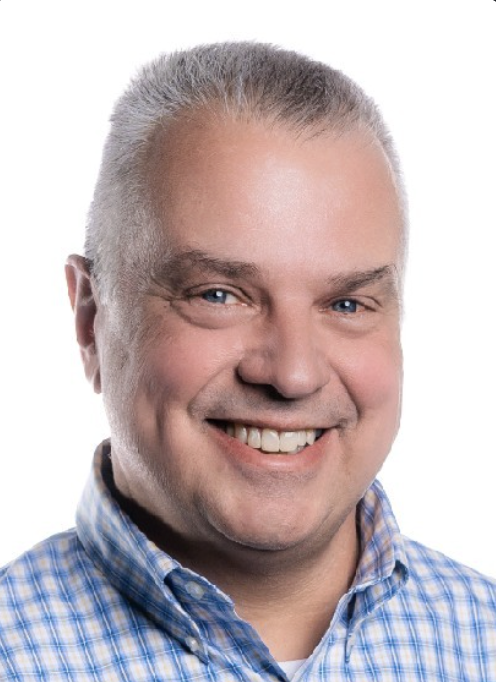
Tom Kaminsky is a longtime broadcast journalist and helicopter traffic reporter whose career has placed him above the New York metropolitan area’s roadways, and at times, at the center of major historic moments. On the morning of the September 11 attacks, Kaminsky was reporting traffic from a helicopter over New York when he witnessed the first plane strike the World Trade Center. His live radio report, delivered moments after the impact, became one of the earliest broadcast accounts of the unfolding tragedy. In this oral history, Kaminsky reflects on his path into radio journalism, his experience covering the attacks from the air, and the lessons he carries from that day.
This interview is part of an oral history project undertaken by Alex Bower-Leet in affiliation with the University of Kentucky.
I am the helicopter reporter for ABC 7 Eyewitness News. I am one of three reporters that ABC 7 has for Newscopter 7. I am the midday reporter. I also fill in during morning and afternoon drives. I am also an adjunct professor at Montclair State University, and I’m also part of Montclair State University’s radio station, WMSC.
Born and raised in Lodi, New Jersey, which if you’re not familiar with Lodi, that is where a good bit of the scenes of The Sopranos were filmed. Claim to fame is that the actual club that was used as the Bada Bing is an actual club in Lodi, New Jersey. And so that’s, but that’s where I grew up. And I still live in New Jersey, went to school in New Jersey, went to Montclair State University and graduated there in 1984.
Life Before 9/11
I was married and my first wife, Lynn, we did not have children yet at that point. And I was the helicopter traffic reporter for WCBS News Radio 880. That was a CBS legacy radio station, all news radio station. We went all-news in 1967. I came on board in 1988 and I was their traffic reporter. From 1988 until the station was sold, the frequency was leased to ESPN Radio in August of 2024. So I had 36 years there as the helicopter traffic reporter for WCBS News Radio 880. And that is what I was doing on September 11th, 2001.
I am not a pilot. I have a lot of hours in the air and not a single one of them behind the stick. I am a professional passenger, as one of my pilots used to call me. In fact, one of my other pilots, a dear friend of mine, always called me talking ballast. So that’s the extent of my piloting skills. One of my internships when I was at Montclair State was at the old Shadow Traffic Network. Shadow Traffic was essentially a clearinghouse for traffic information for about 50 different radio stations in the New York, New Jersey, and Connecticut area, the tri-state area, as we call it. And I interned there for a semester. They hired me right out of college. Basically three days after graduation, I had a job and I was a driver. That’s how we initially used to collect traffic information. We had a fleet of six vehicles. Each one of them had a bag of maps, a two-way radio, roof rack lights on top, and we would each have routes every day that we would drive all around the tri-state area.
So I never intended to get into traffic. I never intended to. I knew I wanted to be on the radio. And I saw this as literally a vehicle to do that. I was on the road for about two years or so. And then I moved inside and I was a producer, basically collecting all the traffic information that was coming in and dispensing it out to the reporters. I also had a quasi-management position at the time, which was a director of information services, meaning essentially I would go to the agencies, I would go to police departments, I would go to the state police and bring them swag, bring them coffee, donuts, and chat with them so this way they had a face. So when one of our people would call them looking for traffic information, they at least knew somebody there. And, through the other internships that I had at Montclair State, I was hired at WCBS in September of 1988 and within about two months I was then hired to do the afternoon helicopter traffic reports. I did afternoons until 1999. Our morning drive reporter, Neil Bush, retired in 1999. And then at that point, I was it. I was the morning and afternoon drive guy from 1999 until the station folded up in 2024.
Being on the radio fascinated me. Reporters fascinated me. When I was at Montclair State, one of the things that really had always fascinated me was the coverage of the Kennedy assassination. So much had been written about the actual event itself, but what fascinated me was the coverage of how these reporters, what was it like to be in Dallas covering this? What was it like to be in New York having to put this information on the air? What was it like to be in that CBS studio somewhere in the vicinity of Walter Cronkite when he broke that news? That’s what fascinated me.
Experience on 9/11
September 11th, 2001 was a Tuesday. It was a primary election day in New York, and that was our focus. The mayoral primary was that day. And it was a normal day. It was a Tuesday. It was the first Tuesday after Labor Day week. And essentially that week after Labor Day, that’s when everyone would come back into the office. It usually wasn’t the week that had Labor Day in it. That week was usually still a little bit lighter traffic-wise, but the week after was always when everybody came back. Everybody was back at school. Everybody was back at work. Vacations were over. Summer vacations were all over. So that’s when things really did start to heat up. So that was our focus that day.
I was just doing my normal traffic reports at 8:46 that morning. Normally, we would have been back at our base at Linden Airport just about that time, because the last report of the morning that I would do was always scheduled for 8:48 a.m. And as I said, I had done a split shift. So that was my last report of the morning. And then I would come back again for an afternoon drive. The helicopter that we were in also worked and provided video for Channel 7 for Eyewitness News. At that point, we were the second helicopter that they had. They would use us for breaks during morning drive, when they would go to local breaks during Good Morning America. And if there were traffic things, that’s what we would do. And we would provide video for that.
So we were told about a collision in the Bronx near the George Washington Bridge on the Bronx side, just north and east of the George Washington Bridge. Reportedly, there was a collision on the Major Deegan Expressway that they had wanted us to look at. And we said, “Okay, we’ll go take a look.” And we did not find anything. But unbeknownst to us, at the time, the first plane out of Boston flew right over our heads. And we did not notice it because that approach was occasionally used by LaGuardia Airport coming down from north to south. So we never noticed it. And we were looking northbound at this roadway. So we never saw that. So we didn’t find this collision. We said, “All right, we’re out of time. Our shift is just about over. Let’s head home.”
As we turned the aircraft south, that’s when we saw a flash and a fireball from the top of one of the towers of the World Trade Center. We couldn’t tell which one. Now, it’s one of those things where occasionally we will see something from the air and what you initially see is sort of an optical illusion. It’s not what you initially think. You’re either on the roadway or on a railroad track. And all it is is the train just sort of going over, you know, creating a spark on a railroad track. So it’s no big deal. Occasionally we’ll see a plume of smoke. And is that a fire? Well, not necessarily. It could be a boiler that was starting up in either a factory or in an apartment building. And that first choke of smoke comes up out of the boiler and then it dissipates. You move into a different position and things change. Your angle changes and you realize, okay, that’s not what we thought it was. It’s a smokestack or something like that.
This didn’t change. It got worse. And our first thought was, we have to go down toward it to see what happened. As we’re doing that, a couple of things happen. First of all, my pilot, Arthur Andersen, at the time, called LaGuardia Airport. And my recollection was that he asked our sign, our N number, the aircraft identifier number, was November 8, Bravo, Quebec. And my recollection is that Arthur called LaGuardia Airport and said, “LaGuardia 8 Bravo Quebec, did you just lose an aircraft?” And then we heard nothing. So he asked again, “LaGuardia 8 BQ, did you guys have one drop off the scope?” And all we heard was “Standby.” At that time, it’s now 8:47. We had our sports report at 8:45. The sports reporter finished. We went to a 60-second commercial. During this commercial, at the end of the sports report and while the commercial is on, I am trying to get a hold of somebody in our newsroom on the two-way radio. That’s how we communicated on a two-way radio. And I am screaming into the two-way radio trying to get a hold of someone. and no one is answering me. I found out later that no one was answering me because they were all in our news director’s office at the time. We were at 57th Street and 10th Avenue. And that had the one window that looked directly downtown and had a very clear view of the Twin Towers. So that’s where everybody was.
So at 8:48, which would have been my last report of the morning, one of our two morning drive anchors, Pat Carroll, introduces me as she normally would. Tom Kaminsky, chopper 88. And I just said, “Something has happened at the World Trade Center. And whatever has occurred here has just occurred.” So all I could do was just speak to what I was looking at. And essentially, in our business, we talk about being storytellers. We talk about creating word pictures. That’s what I was trying to do. Just create that word picture. With all the years in the air, I had a very good idea of where things might be in terms of any kind of emergency response, things like that. But our first thought was, we need to get there. During the next minute or two, we find out that we can pretty much confirm that something has gone into the building. We don’t know what, we know it’s an aircraft, we don’t know what kind. But whatever, as opposed to an explosion from inside the building blowing something out, this was something that went in. It became more and more obvious as we got closer to it.
Our next goal, if you will, was to see if whatever had gone into this building, had it gone through it, had it gone out the other side and down into the street. And this entire time, I am not thinking terrorism. On the 10th of September, we were so isolated. This country was so isolated from that idea. It never crossed my mind. And so we were trying to figure out the best way to see if whatever had gone into the tower had gone through it and down into the street. The only way to do that was to go toward the lower end of Manhattan, which is called the Battery. It is the very southern tip of Manhattan. And that was where we could at least get a view of whether or not whatever had gone into the building had gone through. We were able to determine that whatever had gone into the building was still in there and stayed there. And the second building at this point was not affected.
When the smoke began to drift toward our area, we made the decision, and my pilot, Arthur, actually made the decision to try to go back north from that location to where we had been. And by this point, it is about 9:02 in the morning. And our colleagues, our helicopter colleagues have now, they obviously know what is going on. They have all launched and one of our colleagues who actually was flying in News Copter 7 at the time was right in the area of the Statue of Liberty. As we went north from the battery, News Copter was there and the second plane flew right past them and made that left turn pretty much right at the spot where we had been about 45 seconds prior. And just prior to that happening, we heard the pilot of News Copter 7, our friend Paul Smith, say, “What the hell is this guy doing?” Second plane then goes into the building.
We’re facing north now again, but our camera is facing south and looking at the building. So we initially did not see it. We didn’t see the second plane go in directly in front of us, but it was definitely captured on the video. The image that was captured was one of the images where you see the plane coming in from the right side of the frame and was in newspapers all over the world. That came from our helicopter. We turned around and we were not that far north of the Trade Center buildings, and there was debris on fire flying everywhere. So we made sure we maintained a safe distance. Everyone else maintained a safe distance. Now we were at low fuel at this point, because remember, our shift was supposed to be over at this point. Around that time, the air traffic controller at LaGuardia Airport made sure that everyone got out of the area. He said, “We don’t know if there’s another one coming in. Everybody’s got to get out. Everybody’s got to clear out.” So we cleared N to a place that we knew we could land. Our old base of operations, which was about five miles north on the New Jersey side of the Hudson River in Ridgefield Park, New Jersey. We knew we could land there. We knew the gentleman that owned it still owned it. We knew he had fuel, which was going to be our big concern. We had every thought that we’re going to refuel, we’re going back. And when we landed, we did refuel. We did take off and we got only about 50 feet off the ground and we were told to return to the ground. Everyone else at that point had been ushered out of the area. So the rest of that morning, we were essentially, I was on the radio, just whatever I could see from that vantage point on the ground.
Watching 9/11 Unfold
I can’t speak for Arthur, although Arthur still does fly. He flies me, which is one of the ironic things about me working for ABC7 is that Arthur is their morning drive pilot and we get to fly together again. His thought was simply just fly the aircraft, fly the aircraft that you’re in and stay safe. Safety was obviously a priority for all of us. And for me, my priority was to just speak about what I could see, because we had very little information. We had some eyewitnesses that were calling in to WCBS with these descriptions. But my job was A, to just create a word picture and B, not speculate in any way. Just talk about what I see. But I remember blinking a lot, and not because of any kind of dust or debris or anything like that, I just could not believe what I was seeing.
At one point, I started talking about roadways. I started talking about West Street. I started talking about Canal Street. And I started looking for police vehicles, fire department vehicles, making their way toward the scene. I knew the streets. I knew roadways. I knew how to say these things. I did not know at all what else was going on with this. So that was my focus at that point.
I mean, my point was to just provide information because again, this whole thing unfolds at about a quarter to nine. And you have at the World Trade Center, thousands of people working in these buildings. So the question comes in, how many of these people are already there in their offices? How many people are running late? It’s a Tuesday morning, so people will probably be at work on time. The New York Stock Exchange is right underneath this area. You know, you have thousands and thousands of people, not only in the Trade Center buildings, but all around Lower Manhattan, City Hall, you know, the center of government for the city of New York is right there. So what happens there? That was the thing that I was just trying to get information, whatever information I could out to people. And afterwards, when we were not able to fly, I’ve had very good contacts at the police departments, going all the way back to those days at Shadow Traffic when I would visit the police departments. So I’ve made some very good friends in law enforcement. And the only thing I could really do from the ground was to try to call anyone and to see what information I could get and put that out on the air.
Life After 9/11
Themorning of 9/11, I was on the air until probably about 11:30 or 12 o’clock. And then I knew I was going to come back for an afternoon drive. So the question was, how am I going to do this? We hooked up an exterior battery to the helicopter just to get enough power to to turn on the radios, to turn on my equipment, and for me to be able to broadcast, because that was now my studio. We’re sitting out on this ramp, right on the banks of the Hackensack River, and that became my studio. So that’s how I was going to get on the air. And I was, you know, when I had gone to school that was the first lesson that was taught to me, is to get on the air no matter what. And that was my goal, was to get on the air no matter what and provide information.
We did not know how long we were not going to be able to fly because as the day went on, it obviously, and it unfolded very quickly, that there was a ground stop of all aircraft, not only in New York, but all around the country. And so how do we get on the air? My friends at Shadow Traffic, which had their offices at the time in Rutherford, New Jersey, which was very near where MetLife Stadium is now, said, “We have a studio for you. So just work out of here.” And the next morning, I came in at about 3 o’clock in the morning and just went on the air with whatever information we were able to gather. But I remember when I got in there, the first thing I did was make myself a cup of coffee when I got into the studios. Went into the kitchen, made myself a cup of coffee, and the kitchen window in that building faced right toward Lower Manhattan. It was about three miles away from Lower Manhattan. Maybe a little bit more, but looking directly at Manhattan. And all I saw was a plume of smoke, very low, and just a glow from the fires that were still burning in lower Manhattan. And I looked at that scene and I just thought to myself, we’re never going to fly again. I don’t know how I’m going to do this, but we’re never going to fly again.
And it turned out that we only were grounded for about six weeks. We were able to get back in the air just before Thanksgiving. We had severe restrictions as to where we could and could not go and additional requirements in terms of speaking to the air traffic controllers around the area. It changed, it fundamentally changed how we do this job in those days that followed. But we were able to do it. We were able to get back in the air and do our job. In the subsequent years, I continued to do this job. Before 9/11, we flew past the World Trade Center towers five and six times a day. And for far too many years, we flew past a hole in the ground five and six times a day until the new World Trade Center was built. So my job was to continue just doing my job.
It was surreal. It was absolutely surreal. And again, my job during those days was to just provide as much information as we could. There were restrictions on everybody going into Manhattan south of Canal, the Canal Street area, and Canal Street is right where the Holland Tunnel is. So it changed the traffic patterns for quite a while in terms of when you could drive in. There were HOV restrictions at the time that you needed to have three or more people if you were going to go into the Holland Tunnel after 5:00 in the morning, so suddenly all of a sudden we wound up with 30-45 minute delays at 4:15 in the morning. And so that was something that had never happened. And there were other street restrictions all around the area. So my job was to just keep people informed about that.
How to Honor 9/11
I think the best way to commemorate that day is to just be of service. The legacy in New York, and there are days when it’s really difficult to see it, but the legacy in New York after 9/11 was people helping one another. The 9/11 Memorial and Museum does a really good job of illustrating this. There were posters plastered everywhere of people that were missing. All over lower Manhattan and really all over Manhattan, like at every piece of plywood on a construction site, there were missing posters. Have you seen this person? They worked at Cantor Fitzgerald. Have you seen this person? They worked at Windows on the World. So everyone was trying to help one another. And I don’t know how we would ever get back to that as a nation. I shudder to think what it would take for that.
But if you can be of service to someone, one person on that day, and that’s the legacy I think that should remain of that day, and obviously don’t ever forget what happened and don’t ever forget those that were lost but remember how people helped one another in in this city and in Washington and in Shanksville and really all all around the country. What’s interesting is my wife, Kate, now my first wife, Lynn, passed away in 2021. My current wife, Kate, on 9/11, she was in the Washington, D.C. area. She was living in Springfield, Virginia. She and her husband at the time, she was working for a trade association for the optical industry, and they were working in Alexandria. She would cut through that Pentagon parking lot to get to their office building. And when they heard about this, before the Pentagon was attacked, her husband at the time called her and we all knew each other. We were friends from when Kate and I had worked together at Shadow Traffic. So my wife at the time and Kate and her husband at the time, we were all friends. And her husband called her and asked, “Why is Tom Kaminsky on WTOP in Washington?”, which was the CBS network radio station in Washington. So that’s how they found out by hearing me on WTOP in Washington.
And, you know, all of these connections, but everyone has a story. We talk about being storytellers, having people tell their story. There are a lot of stories, and I think those stories should be remembered. And I think the people who have those stories should be listened to. But again, I think the best way, in my opinion, is to be of service on that day.
I’m an adjunct professor at Montclair State. When I first started teaching, that was about 10 years ago, and I had maybe one or two students who had some sort of cognitive memory, or they had family members who were somehow involved. That’s really not the case anymore. This is straight out of the history book for these students. And the other thing that is important is that there is so much misinformation. There are so many theories. You can find so many conspiracy theories and other things. Unfortunately, a lot of times my voice and my reports from that day get attached to them because my report was, it’s been generally acknowledged that it was the first full broadcast report of the events of that day. My reports tend to get lumped into that. So I think it’s important, especially for students, when you’re looking at things like this, you have to look with a critical eye. And that’s becoming more and more apparent every day.


 Previous