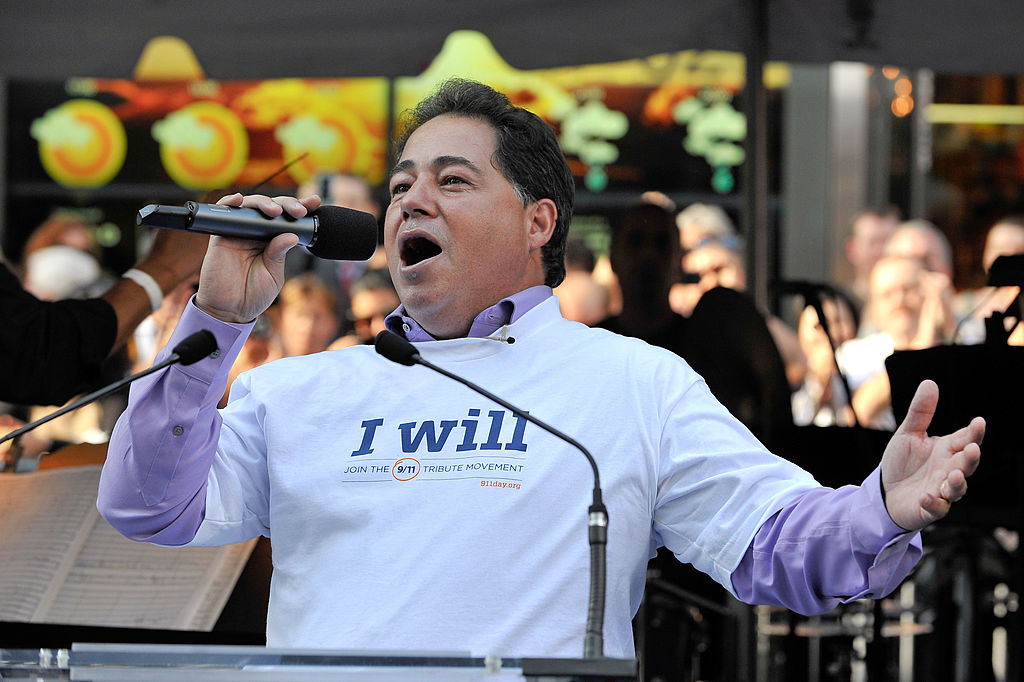
Daniel Rodriguez is a singer, former New York City police officer, and 9/11 first responder whose life has been defined by both service and song. Born and raised in Brooklyn, New York, he began performing professionally at the age of 12, making early appearances at venues including Carnegie Hall. Known to many as “the singing policeman” and “America’s tenor,” Rodriguez combined his musical talent with a career in public service, ultimately serving with Patrol Borough Manhattan South on September 11, 2001. This oral history explores his journey from the streets of Brooklyn to stages across America, and his ongoing commitment to honoring the legacy of 9/11 through both service and song.
This interview is part of an oral history project undertaken by Alex Bower-Leet in affiliation with the University of Kentucky.
I was born in Brooklyn and grew up in Brooklyn and my mother and father are Puerto Rican and I basically grew up singing all of my life. Most people know me as the singing policeman, America’s tenor. I was a 9/11 survivor, 9/11 first responder. And I’ve pretty much had a very full and interesting life where the music has taken me as a child and as an adult.
A Passion for Music
I grew up in Bay Ridge, Sunset Park, Brooklyn. So a really cool area, very diverse and was a street rat, just when we were kids, we ate dirt. So we grew up on the streets and I started singing when I was 12. I started singing professionally when I was 12 years old. Started in school. I was auditioning. I had done really, really well that year in elementary school and going to middle school. And I’d done really well. And part of going to the new school was we were given a talent, so we had to choose from. And so I was left with a choice of band, chorus, or theater arts. And I didn’t play an instrument at the time, and the chorus was for girls. I learned a lot later that chorus is probably a good place to be. But theater arts stuck with me, and the teacher who taught the theater arts class was a teacher from Juilliard, Elliot Dorfman. And he took me under his wing very early.
And I had my first show when I was 12 years old in Manhattan at the Barbizon Plaza Hotel and also in school. And he started my training in Bel Canto. And I made my Carnegie Hall debut, my Del Terzo Studios when I was 16 and Carnegie Hall when I was 17. And I just kind of continued on that path until I started a family when I was 20. And then things changed a little bit. But I think the thing that kept me going is that I’ve always believed that I’m a singer before I was anything else.
Life Prior to 9/11
12 years old, I started singing. 17 years old, and I made my Carnegie Hall debut. I’m working in the city, pretty much working as an assistant director, set designer. I produced my first show when I’m 19. I started a family when I’m 20 and I had to give up. Well, actually, my mentor basically said, “I can’t help you anymore. You know, you’re going down a different path.” And I definitely went down a different path because I had lost everything that I had been working on. The next couple of years were really, really difficult, going down some very dark roads. But always the singer. And because I didn’t have an audience anymore in the theaters, I would have audiences in the bars where I would throw a quarter in the jukebox, sing my way, and have people buy me drinks all night. Odd jobs, because my father basically worked for the city and said, “You need a job with benefits, you got to get a pension.” So I started taking all the city jobs and I was the singing bus driver, the singing cab driver, the singing mailman. I did six years in the US Postal Service. And after six years in the Postal Service, I was ready to get a gun.
And so I went into the New York City Police Department, just on a whim. I took the test, my number came up and I said, “What the heck?” I always respected police officers, and here was my chance to do something where I didn’t have to work 40, 50 years to retire. I became a New York City police officer, and my singing was always leading the way. Even the detective who was my investigator, I was singing for him in churches in Greenpoint, and I was his soloist. He was a detective at Applicant Processing, Ed LaPlante. And when my number came up, I got the letter. He said, “Well, I can do your investigation.” And every time I went to the office, he’d have me sing a song to the girls in the office. And next thing you know, I go through the academy.
They asked me to sing for my own graduation, which is on YouTube. It’s pretty cool that I can go back and look at that anytime. And I became a New York City police officer and served for 10 years up to 9/11 and then witnessed firsthand, very close, the tragedies of that day. I think that basically solidified the rest of my life in music because that’s where I was going next. I sang a prayer for America, sang for many, many funerals, and I knew that was the best way I can serve my friends, my family, my community, my faith.
Response to 9/11
I remember that I was living on Staten Island. And I was working for Patrol Borough Manhattan South. The borough commander was Chief Alan Hale. And my direct supervisor or the person that I worked with most closely was Inspector Callahan, Deputy Inspector Callahan. We were all very good friends. It was the Community Affairs Department. And I worked a little bit of a later shift. So when I was on my way to work, I knew that my crew was already there. As I was crossing over into Brooklyn from Staten Island, you went over the Verrazano Bridge, and halfway across the span, the traffic started slowing down, which was kind of weird for the morning. That’s usually by the time I started going to work a little later, the traffic was a bit easier. So I found it a bit odd. And the radio was not working for a moment. It was going in and out. And I figured, well, maybe that’s because I’m here in the middle of the Hudson River. Next thing I know, I’m looking up and I see ash paper with burnt ends going across the span. And one particular piece of paper is the type of paper they use at the airlines when they print out the manifest. It has the little holes along the side of the very old machines. And I saw that and I thought, well, what would that be doing here in the middle of the Hudson River? I mean, we’re just where there’s no structures here. There’s no, sometimes they burn trash in the buildings on the Brooklyn side, but we were way too far for that.
And so I followed it off to the left, off to my left side. And I had to say the day was absolutely gorgeous. It’s beautiful, not a cloud in the sky, very crisp, clear. You can see for miles. And that’s when I saw the first tower was already burning. It just was overwhelming. And, to me, my first thought was that it had to be some type of, maybe gas explosion, gas mains, something that can cause that big of a fire, But I was stuck in traffic in my personal vehicle and my overwhelming desire to get down there because I knew that my crew would be there. We were Patrol Borough Manhattan South, which means we covered everything from 57th Street down to the Battery. We were the borough commanders, all the precincts in that southern part of Manhattan were under our jurisdiction. And at that moment, a caravan of emergency vehicles that were responding from Staten Island started coming across the span. You had a mobile command unit, you had ESU, you had just every, every emergency vehicle you can think of was coming by regular RMPs, regular sectors, and then under them plane cars, the unmarked cars.
Well, I kept waving my badge in the air as they passed, hoping that I would be able to get into the caravan. And one of the next to the last vehicles gave me a little space and I jumped right into the caravan and I started heading down in my own vehicle into the HOV lane, which was the BQE that leads directly to the battery tunnel. And followed everyone, followed the caravan down the HOV lane into the battery tunnel and going through the battery tunnel, when we came up on the other side, I could see the light of the Manhattan side of the tunnel. And the traffic was backing up. There were so many emergency vehicles responding that started to slow up. And I put my indicator to the right to go north on the West Side Highway to where the towers would be. And in the last moment, I remember just a thought, let someone know where you’re going. That was the thought. That was very clear. And with my indicator to the right, I made a left. And I went to One Police Plaza and I checked in there with the inspectors.
The chiefs, they were all outside. They were mustering officers to respond. And one of the chiefs told me, “Get to City Hall. There’s a mobile command unit there, and we’re going to try and set up communications there.” So I started walking towards City Hall when I passed a friend of mine who works security. One Police Plaza worked as headquarters security, and there are booths stationed outside all around headquarters there, security, you’d have to pass through them to get into the building, these different security checkpoints. And I said, “What’s going on? What happened?” And by this time, the second tower was burning. And he said, “We’re under attack. There were two planes that just ran into the buildings.” And he said, and I remember his face very clearly, actually, I remember it often when he said, “I could see the faces of the people in the plane. I could see their faces in the windows. It just passed right over.” And that stuck with me for a long time.
And I made my way up to City Hall, walked over, went to the global command post. And I stood there looking around and said, “This is a waste,” because I kept hearing a lot of chatter on the radio of people calling for help. So I decided to get out of there and head down to what would become Ground Zero and found my inspector. Crazy enough, he basically showed up at the same spot. So now here I was with my supervisor and a great guy, absolutely great, great guy. And I said, “Well, what do you want to do, boss?” He said, “Well, let’s get down there.” And we started heading down Broadway, going to go down to Greenwich when I heard a sound like an elevated train coming overhead. It was just that low, low rumble, low low rumble and it just got louder and we watched the tower come down on top of us and all the horrors that preceded that and we started back to the mobile command post and we just had everybody who was around us which had them come into the mobile command post closed all the vents and we watched as the ash just engulfed lower Manhattan.
Everything was covered and it was surreal. So when the ash passed and we came back out, we started basically telling everyone to get off the island, pointed them towards the bat, the Manhattan Brooklyn Bridge and basically anyone who came was just get off, get off, go to Brooklyn, get out, go uptown, just get away from this area. And encountered a couple of people who told their stories again, things that I don’t want to say haunt you, but they stay with you. There was one lady who was inconsolable in the back of the mobile command post and I said, “What’s going on?” And she said, “My son.” And I said, “Well, where is he?” And she goes, “He was in the train station. I just dropped him off.” I said, “Well, what train station?” And she pointed towards the towers. It’s just, he was there. So, you know, the likelihood was that he wouldn’t have survived, but she knew.
And we continued to basically direct people off and try and help as many people who were injured around us. And then I said to my inspector, “You know that a second tower is coming down, boss. This was planned and coordinated, and that second tower is going to come down on top of us.” I was convinced that we were done. I was convinced that this was my last day. I made my peace with God a few times that day. And the tower came down as we thought, seeing all the things that were indescribable. And we just kept on going. We kept on going. We left the command post and started heading down towards Greenwich again. And listening to all the radio chatter and the radio was heartbreaking because we were listening to officers that were trapped. We’re listening to just all of these people calling for help, the desperation that you heard in their voice was just horrendous.
So we finally got down to Greenwich and started heading towards the pile when Building 6 came down. And I remember the big wide building with a lot of windows and saw the right shoulder from what I was looking at, on my left side, just saw that buckle, the glass on the whole side just shattered as it went down. And as it went down from that left side to the right, just once again, we were trying to get away from the plume of gray ash, smoke. And from that moment forward, we basically went wherever we were asked to go by the commander, by the borough commander, by the inspectors, by the Office of Emergency Management, which brought everybody together. And the mayor was meeting with them. We wound up in these rooms, these offices, while they’re making decisions, trying to figure out where we’re going to go next. And we wound up right at the mobile command unit that was set up on Vessian West, which is where you saw the president on the pile, you know, and that’s where I was. That’s where I was detailed for the remainder of my time down there. Spent pretty much every day, we didn’t sleep. We had cots set up, you know, and basically no one wanted to leave.
And then they would set up the temporary morgue behind the mobile command post right there. And they started bringing, you know, body parts and then it was too visible, started realizing that the cameras, the news cameras were right above us. And so we covered all of that up so that we’d have a little bit of privacy as people were being brought off the pile and put into the cold storage behind us. And there’s hundreds of stories of brave men and women who went in there looking for family and friends, other firefighters who went in looking for their brothers, literally their family. One brother that went looking for his brother was a firefighter from a different house and found him, found his gear, found his stuff, you know, weren’t really, there was no real survivors. They had set up a triage up near the boat terminal of town. And it was all set up with all kinds of medical people and medical supplies and no one came. And there was no one to bring there.
That’s my piece of what happened. But there’s so much more, so many people who gave their lives and lost their lives on that day. And we’ve realized now that we’ve lost more first responders since 9/11 from 9/11-related illnesses than we did on the day. And I keep singing at funerals, it’s 25 years later, and I’m still singing at funerals for guys that have succumbed to one kind of cancer or another or pulmonary diseases, pulmonary issues. And I can only imagine what the civilian death rate is as well. There’s so many civilians down there. But yeah, that’s kind of it.
It always stays with me because throughout my life, I still represent 9/11. I’m still the singing cop. I’m asked everywhere I go, everywhere I perform, you know, what happened, what do you remember, about friends who passed, so it’s always fresh with me, because of the career that I have, the life I lead, and a big part of it is part of 9/11.
Life After 9/11
Directly after 9/11, I was asked to sing at Prayer for America, which was at Yankee Stadium. And it was hosted by Oprah. And there were many, many amazing people. Little side stories of me singing for the Metropolitan Opera because Mayor Giuliani made a phone call and got me an audition. And this is a couple of years before 9/11. It was 1999, as a matter of fact, it was the millennial year. And then I met Placido right at that moment. I was supposed to sing for Placido Domingo, and I hadn’t been able to get in touch with him. I met him that moment, at Prayer for America. And just before I go out, he says he wants to hear me, can I come down to the Met and sing for him? Because my first audition was a travesty. And there I was in the middle of all these amazing people that I respect and admire, and I’m singing for this event. It opened a whole new world, or at least it introduced me to the world that I’ve been waiting to step into. Placido, I sang for Placido. He invited me to study with him. I get a call to record God Bless America and the National Anthem because the department, everybody thinks this would be a really, really good thing for people to have. And so I record a single and we raise 10s of thousands of dollars for the Twin Towers Foundation. And it just keeps going on and on from there. From there it became an avalanche of things that were just coming as faster than I could than I can do, I couldn’t even think they just started happening. Funerals over and over again, funerals for friends that I knew that passed away from the photo unit, from the video unit, from the ceremonial, and then people came, people started asking me to sing for them because they’d seen me on television doing all of these other things.
And next thing I’m on Oprah, I’m on Letterman, Larry King, Regis, Lana, and these are all basically the police department getting the phone calls and saying, “Yeah, we’ll send them over.” The commissioner said, “This is what you need to do. This is the best thing that you can do for us in your capacity as a police officer. This is what you do best. This will heal the city.” And so I just kept doing it, kept singing. And then next thing someone asked me to sing for an event and they wanted to pay me. So I called the department and I said, “Listen, I’m going to do this event, but I’m taking off the uniform.” I said, “I’ve always been a singer, so, you know, I’m not going to refuse a chance to sing, but I’m not going to sing as the singing policeman. I’m going to be Daniel Rodriguez.” And then that started a career in music or rekindled my career that I kind of had to give up in my 20s, you know, professionally because of starting a family and because my mentor, you know, bailed. I continue to sing, and my music in itself, even though I’m doing work with symphony orchestras, and I’m not singing Neat Loaf or not that I wouldn’t like to or that I haven’t, but my music was inspirational, was still uplifting. You know, I was doing music from my first album, The Spirit of America, doing music that pretty much continued, and even today, continue to do music that’s uplifting and fulfilling in that sense of faith, patriotism, and just good messages, positive messages.
The Road to Healing
I think that my music was my therapy for a while, for a long time. It was my therapy. I felt that I was playing a very positive role in the aftermath of 9/11 and giving comfort to the families. And I felt that I was the one to do it because I’ve been a professional singer all my life and I knew how to command my emotions during these times when you really want to get these hymns and these these messages across of faith and of our faith in everlasting life and a better place. And, so the families still contact me and on anniversaries, I still get calls, “Thank you so much for what you did for us then.” And, so I feel that all the things that we do in life, we do for a reason or happen for a reason, because wherever we wind up, we’ll say, if we changed any one thing, we may not be where we are. And my life has been tumultuous, if anything, but it’s also been very, very blessed. And I think I needed my calling from very, very young. So it helped me make decisions in life that kept me moving in a certain direction. That’s where I am today, just fulfilling my calling, continuing to do all the things that I’ve been doing all my life.
How to Honor 9/11
I think first and foremost, we remain with the commitment that we never forget, that every year we continue to honor the men and women who have lost their lives, not only on that day, but since. I also think we need to be able to keep the stories alive, keep teaching those who weren’t born at the time, those who are in their 20s and 30s or five years old when this happened, and they’ve still lived a full life, to let them know that, what mistakes were made, what things we needed to look out for so that we don’t fall in those same traps again. At the moment, I feel a lot of anxiety because here we are, back in the trenches with terrorist organizations and, bombs are going off and and I can’t help but think in the back of my mind that God forbid something else happens, that we’re not aware of because we were caught with our pants down, during 9/11. And I hope that we’re more diligent and we need to just be aware that, as much as there’s wonderful things in the world and it was just a beautiful place and there are bad people that want to hurt us, we got to look out for that. We should teach our youth that it’s a hard world. It’s a difficult world out there. Just be aware. Love, but be cautious.