
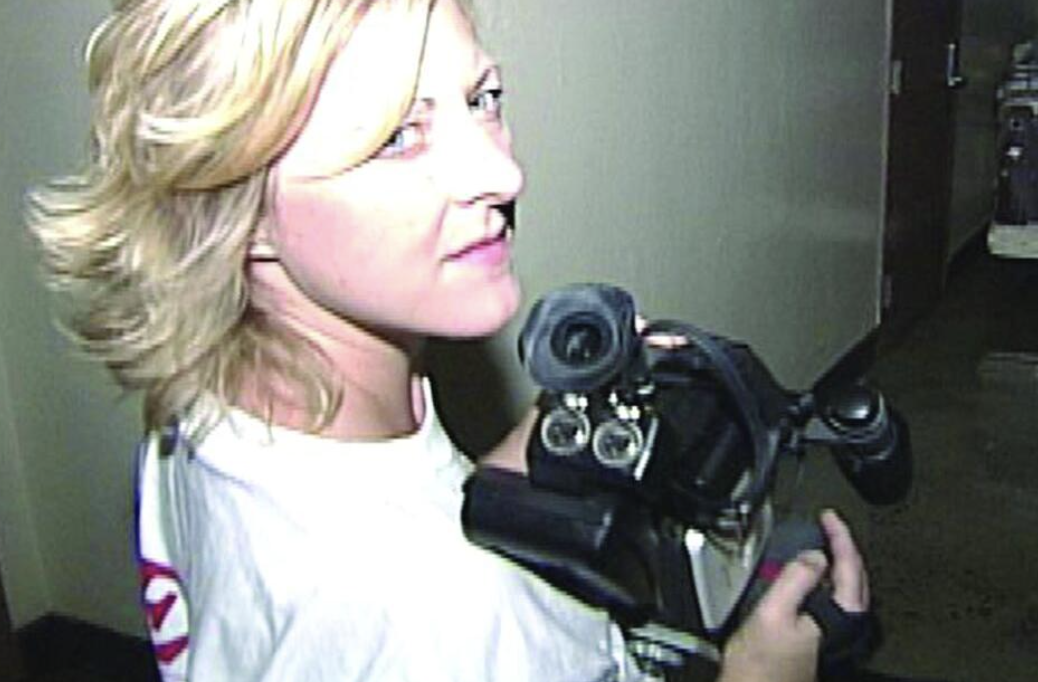
Jude Coke, a South Dakota–raised video producer based in Dallas, reflects on her unexpected presence at the Pentagon on September 11, 2001, where she and her team documented the emergency response and helped preserve a vital record of resilience, service, and remembrance.
This interview is part of an oral history project undertaken by Alex Bower-Leet in affiliation with the University of Kentucky.
Life Before 9/11
My name is Jude Coke, and during 9/11, I wasn’t married yet, so my last name was Rochatl. I grew up on a farm in South Dakota. So I have rural upbringings. And from early on, I knew that I wanted to explore video production as a career in storytelling. So I pursued that through college and then landed a job in Dallas, Texas in video production. And that has basically kept me here in Dallas. And I married someone from Dallas, Texas, started a family here and continued with a career in video production in this area.
For me, it was kind of a tumultuous time. I was following my video production career. I was into my second job role or experience at a different company. And then I was laid off in April of 2001 because the company basically was going under. And so I was unemployed and it was very just kind of traumatic for me as a young professional. I was trying to grapple with what to do and video production jobs back in 2001 were not as pervasive as they are now. It was very difficult to find something in video production. But I did. And one thing that is very curious to me during that time is even though I had that job at the company, before I was laid off, I kept hearing in my head this voice that the job wasn’t quite right for me. And I kept hearing a voice that said, you need to be making videos that make a difference, right? And so I didn’t understand kind of how profound that was, but I knew it was what, you know, an internal calling was that I needed to do.
So while I was in that job search, I did find a job that I thought answered that calling. And it was with a company that did fire and emergency response training along with law enforcement training. Those were just two lines of business that they had. And I accepted a role as a video producer to produce their firefighter training documentary program that was an hour long. That was kind of a Dateline style, you know, magazine style. And I was really excited about that. I was going into departments to get their lessons learned from past incidents. And I thought, hey, this is it. This is answering that calling that I had had earlier and that maybe being laid off wasn’t as traumatic as I thought it was. It just kind of moved me in the right direction. So I was really excited about this job. I was getting to understand the company. I was hired in June, July timeframe. And so I didn’t have my first solo assignment where I was in charge of it by myself until I arrived in Boston on September 10th, 2001. So I was there with myself. I had my videographer, who is part of our company and had been there for a while, so he understood the types of scenarios that we may be doing on the video shoot. And then I had a firefighter with me who was part of our advisory board at the company because I basically knew nothing about, you know, this industry that I was just beginning to learn about. And we were covering an incident that had happened in Baltimore that summer in July. So we had a full lineup of interviews to do and, you know, we had some maybe reenactments that we were going to be doing. I was really excited about this first solo assignment. I had to produce my first training video with the company.
So even being from a small rural community, we were fortunate to have a very strong teacher. She was a literature teacher and she kind of brings emotion out because of how much she meant to me during that time of my life. But we had a mass media class and I took her class and there was a portion of the class where we studied movie making. And I remember we studied Star Wars, but the one that really got me hooked was The Wizard of Oz. And it was about understanding the techniques and the special effects techniques that were used to make that movie. And I remember being in class and getting goosebumps, and it just went from the tip of my toes to the top of my head. And I just knew, oh, this is it. Like, I don’t know if movie making is it, but I need to be in this field in some capacity. And so I just really felt a very strong attraction to that, that type of, you know, career or business or what I wanted to do with my life.
And so then I attended the University of South Dakota and was in their mass communications department and graduated with that degree and they had a college news station. And so I was really interested more in being behind the scenes when I understood how producing, how you put the stories together and you put the lineup and rundown and the shows. And I was basically running things behind the scenes for our college news station instead of so much being in front of the camera. Like it really, I didn’t feel like that was the right place for me, but I knew that was part of the business that you needed to do if you wanted to kind of excel in that direction. I ended up interning as a general assignments news reporter for a summer in South Dakota, and I really enjoyed it, but I thought this in front of the camera is okay, but I’d rather be behind the camera producing the shows.
Yeah, one thing I want to add, though, is that, my parents, I was the youngest of three, I have two older brothers and sisters, a brother and a sister, a lot older than I am. And, they gravitated to our hometown life. And I kind of had these other aspirations that would take me away from there. And I remember when my parents visited me for like parents day at the college station, my dad was in, behind in the control room and looking kind of at all the technology. And he said to me, I don’t understand how you’re ever going to get a job in South Dakota knowing this. And I kind of already knew that this is probably going to take me away from, you know, what they had always known be for their family. And it was an opportunity to kind of say, well, this, you know, this is probably going to take me somewhere else. And I’m okay with that. But I’m not sure if they were ready to hear that. But eventually, they were very supportive of what came ahead for me. So yeah.
9/11 Experience
I had a meeting at the Baltimore City Fire Department with a public information officer. 00 AM meeting. So myself and my firefighter technical advisor, his name is Christopher DeWolf, he and I had a meeting there to kind of meet with the PIO, go over the itinerary, and kind of do a meet and greet with the leadership of the department since we were going to be featuring them in this program. We got there a little bit early and we were escorted to the PIO office and there was nobody there. And I stayed in the office and Chris went down the hall to kind of investigate and see what was going on. And he felt very comfortable doing that because, you know, he was part of the fire service. I was pretty nervous that day only because I was doing this assignment for the first time at this new job. He came back to the office and he was like, Jude, Jude, come here. And I followed him to another office and there was a television and a few of the Baltimore City Fire Department leadership fire service was around the television and we were watching the tower, the North Tower had been struck in New York. And so we were watching that feed that was coming over live over the news stations. And I remember them discussing things. They were really concerned about how their fellow firefighters in New York were going to handle the situation just because of all of the stairs. And they just really felt it was an insurmountable task to do. And they were really feeling it for their brother and sister emergency responders there.
As we were watching, we saw live as the South Tower was hit. And my first impression was, I was seeing a replay. But then my mind said that doesn’t make sense because there is one tower already, you know, been struck and now we’re seeing the second one. And I think it was just so unbelievable at the time that I wanted to feel that it was a replay, you know, but it wasn’t. And at that point, the fire service professionals that were around me, they knew right away, they looked at each other, they said, this is a terrorist attack. Like they knew from their training that this, this was happening. So I got some really heavy insight as things were unfolding in New York City. For us, though, we still had a program to produce. And so our next stop was the fire academy there for the fire department in Baltimore. And so myself and Chris went out to the fire academy and our assignment there at that point was just to kind of get some additional footage of what was happening at the fire academy. And while we were there, they also had the televised broadcast of what was happening in New York City on this big screen in their kind of like training room or auditorium and a lot of the fire personnel that were site there were gathered around and I was then starting to understand that I needed to start capturing that event. Also understanding I needed to do my assignment that I was there for, but that this was something very significant across our nation and to start recording the imagery of how people, especially in the fire service there in Baltimore, were kind of reacting like the human emotion that was was around me of how they’re responding to this or just their the the humanity of it at that time.
What got us then to the Pentagon is that we had made a phone call to our Home Office in Dallas to let them know, hey, you know, we’re on assignment in the East Coast. And we let leadership know. And at that point in time, the Pentagon had been struck. And I just, I don’t remember how we all kind of figured that out. Everything was unfolding very quickly. I believe I was at the fire academy when the Pentagon got attacked. A phone call was being made. And basically our home office said, if you’re on the East Coast and our business is firefighter training, try to get as close as you can to the response in Pentagon to capture that and how it’s unfolding because this is a huge event for emergency responders and we need to try and be as close to it as possible to you know be of service to them and how this unfolds so Chris and I went back to the hotel we got our videographer his name is Bill and we were in this rental van that we had and Chris was driving because he was from the East Coast, he was from Maine. And so he knew kind of the roads and being able to travel pretty easily there. And we started heading towards Washington, DC. And as we were coming into Washington, DC, the traffic started to back up and I could distinguish and start to smell burnt plastics, electronics in the air. We knew that something had happened, right? That there was just this smell in the air. And then I asked Bill, I said, turn on your camera. He had a camera and I also had a producer camera. And I gave him my producer camera and I was like we need to start recording like our journey into Washington, DC.
So he had the camera on and we were stuck in traffic. And along on the side of the road, kind of in the, ditch you know trying to get a past traffic a vehicle past us and Chris who is driving and it’s a firefighter identified and he set it on camera and he said those are firefighters they’re going to the station and we realized that he knew that because they had a firefighter emblem on their back bumper so it’s on camera and it’s the moment we start following the firefighters who are being mobilized who Chris has this instinct that that’s what’s happening and we’re weaving through traffic we finally get on some side roads they had stopped because they were very curious why a white van was following them. Chris explained who we were and at the time our emergency responder programming. We had customers all across the United States and some internationally at the time, and they knew of us, like we were a very popular training, firefighter training and accreditation service. And so they knew of our name and they said, okay, you can follow us to where we’re being mobilized, but you need to talk to the person in charge there, the captain, whoever, and so we agreed to do that.
When we got on site, we continued cameras rolling, just capturing those firefighters being mobilized, getting ready to go. And we learned at that station that they were being police escorted into the Pentagon grounds, into the parking lot because they were responding. And we received permission from them to follow them into the Pentagon grounds. and then talk to leadership on site who was there and explain who we were, that we were there, and see if we could be of service in any way. So one moment that sticks out to me is like putting my first visual on the Pentagon. And I’m not really sure like what I’m going to see, I’ve never been exposed to anything like this before, but I remember being in the the caravan as we were following police escort and we make this curve underneath an overpass and the camera is rolling and I see it for the first time and I couldn’t even help it. Like my expression was, Oh my God. Like it just struck me as just this devastation. And it’s one thing seeing it on television and hearing these tragedies happen. But when you see it with your own eyes like, it affects you viscerally, you really feel what is happening, and just the destruction and just everything the human experience with that. I mean, you start to feel what that is. So we make our way on site, we park the vehicle, Bill gets out with his camera, he sets up a tripod and he just starts taking footage of what we can. There’s already yellow tape around the perimeter pretty far back from the Pentagon where the. sidewalk was at the time and so we’re not crossing that line and then Chris goes and he tries to find the fire department personnel that’s in charge there and so we’re waiting for him to do that and at the time too I was told by my employer in Dallas that I needed to call them as soon as we got on site and give a live report to them.
And how this worked at our company was that it was satellite based at the time. So some of our larger department customers were receiving our training 24 hours a day via satellite, and we could break in with live reports and live news broadcasts. So our office in Dallas was prepared to do that because they knew we were going to be on site. I made the phone call. And so I’m doing a live report for the first time on this major incident to the fire personnel across the nation who are very much interested in what is happening, especially at the Pentagon, because it is such a secured site. And we were able to kind of bring that to them and not as a news organization, not as military personnel, like we were part of their fold. And at the time, I mean, I had enough experience, not enough really, but, you know, ’cause I had just interned at a news station, but just try to remember what do I see, what do I hear, what can I smell, like, what is it that I can deliver to them at that moment in time? And I just, I tried to do that.
One thing for me is that, I really feel that we as a team, the three of us, accomplished something pretty special and unique at the Pentagon. When we were there. There was a point in time where we were told that all media had been basically sequestered from the scene, that they didn’t want the news media there. It was a crime scene where the FBI had a heavy presence, the military. There are things inside the Pentagon that you don’t want to have easy access to, whatever those may be, intelligence operations and that sort of thing. So when we were told after Chris had met with the fire commander and they pretty much had a unified command sort of established by then, at least from what I remember, it was the Arlington City Fire Department and then also the FBI that I knew were in close working association at the scene at the time because we were told that we had permission then to be on scene and to capture the emergency response. So we were to record this for the Arlington City Fire Department and then also for the FBI and were to turn over copies of the tapes so they could review them of what happened there at the scene. And so that was our mission and we had this responsibility.
I knew that this was a huge national event unfolding in front of us. And then it was to me, I’m just like what were the chances of us starting off in Baltimore, having a series of events that unfolded, and then for us to have kind of this decision to make that we’re presented with this responsibility to record the emergency response. And yet to know things were very uncertain yet on scene. They were still unaccounted for planes. You know, we didn’t know if the Pentagon was going to get struck again, like things had happened in New York. And for me, as you know, a civilian, because of how all of those things had aligned and even back to when I was had this intuition about you need to be making videos that make a difference, I almost felt like I was at the right place at the right time to do what I was supposed to be there to do. Chris knew without question. I mean, he’s a firefighter. That’s what he does. He’s there to serve the fire service and emergency response and all of the oaths that come along with that. And for Bill, too, we made a conscious decision as a team because Chris said, I run into this stuff. You guys don’t have to do this. You know, if you feel that your safety is at risk or whatever, he really gave us the individual decision to decide what we wanted to do with our life.
And the three of us were, we just all agreed. We had this, this responsibility almost that this was there for us to do what we could to be there as a representation of the fire service and the emergency response and to record that aspect of this event, that it was worth being there. And it was, you know, worth risking our lives to do that because at that moment in time, we became part of the response. And when I look back on it now, it is like that’s how we chose to show up that day. And that has power, right? That shows that,whoever did this to us, whoever did this to the Pentagon, in New York, that we stand in resilience to this and this is how we’re showing up to do that.
Bill actually lives in the suburbs here very close to me and occasionally on 9/11 or around it, we get together and just remember in that way. Chris is still close to my heart. He passed away in 2005 in a line of duty death. And so he has a very interesting story because he was there with us at the Pentagon. And if it wasn’t for him, we would have not captured the valuable information and interviews and everything that he was able to talk fire service with, all of those that were responding on site. He really made that content the value that it is for the fire service at the time and now for the American people. We were there three days and then we had another crew that drove from Dallas, picked up Chris in Washington, DC, and they drove to New York City to try and get emergency response coverage that they could there. So Chris was like one of the probably very few people in the fire service who were at both locations in a week’s time to try and do some coverage.
By the time that crew got to New York City, from what I understand, things were fairly secured up there, but they did capture some stories and footage that they could. But you know, Chris’s work at that time was very instrumental and very important to him. And six months or so before he passed, he had approached me and said, Jude, we need to write a book about this experience and what had happened. And that was really Chris’s project that he wanted to do. And unfortunately, he wasn’t able to write his book. So over the years, I’ve really felt a responsibility to him to let his story be known and to make sure that the footage that we captured gets placed honorably and responsibly in education and historic institutions, especially now with the 25th observation coming up.
We were the storytellers on scene. We were not the ones putting ourselves in danger and going in and doing the hands-on work, but we were there for those who did. And we weren’t there to sensationalize anything. And that was a very important responsibility to us. It didn’t even feel right at the time when we were there to do what we call a selfie now. I mean, there was no name for it back then, but I’m just like, we cannot take our photo in front of this crime scene like it just didn’t feel right, and we all agreed that we’re not. We’re not gonna do that. We’re not gonna pose in front of this site. We were there in an honorable way to try and capture what we did. And not only were we there to follow the emergency response, but our cameras were kind of allowed just to capture what was happening on site and what was unfolding in different aspects. I don’t even remember what day, first or second day, President Bush and Donald Rumsfeld were there. I believe it was on September 11th, and we were able to get a very short interview with Donald Rumsfeld, who was Secretary of the Department of Defense at the time. And I wasn’t even quite sure who he was when somebody told us. And I mean, I was just kind of far removed from what was happening in government at the time or whatever. But we were able to get a quote from him and it had to do with the emergency response happening on scene. You know, that’s what we were looking to capture. And I feel really good about that work. I felt uncomfortable being at the scene because we were still kind of looked upon if people didn’t know that we were part of training and part of the emergency response and they’re on the behalf of the Arlington County Fire Department. They thought we were the news and nothing to discredit the news, but they just tend to maneuver and navigate in a different way, right? And we had a set purpose and intention of being of service to the emergency responder community and to kind of capture history as it unfolded in front of us.
So there were some other important moments on site. One that is very strong to me is that it was, I think the 13th, we were still there and on site, there was a Marine flag that was on the fourth floor, right at the impact zone, and it was on the floor of one of the office buildings that was exposed to the destruction. And unseen for the first two days, people kept talking about that flag and how it was just kind of standing near resilience. It didn’t look like it was even touched by the blast, and it was a real symbol on site to all the emergency responders and military and everybody. And on the 13th there was kind of a press corps or something that came through and they were being escorted through and talked to about what was happening on site. And at the time, I saw this military personnel go up kind of to what’s like a cherry lift or, construction lift. And they started to make their way up to this flag. And I had this instinct. I was like, Bill, let’s get away from where all the other press people are. They’re going to rescue that flag. And so we set up a camera. We captured that. I got interviews with the folks as they were coming back. And that flag ended up being this very important symbol even past 9/11. And now that flag sits in the National Marine Corps Museum in Virginia. But they had the flag then toured and it went up in the space shuttle at one time. I mean, this was a very important symbol of that event and how America responded to it. And so that’s part of the footage that I believe only we have because the press at the time were not on site and knew the significance of that flag. I could be wrong about this, but I know that we were the first to interview those that rescued it and then moved on to that press team to kind of do more interviews about it. So I’m in the process right now of making sure that that footage is deeded of gift to the National Marine Museum in Virginia. So we’re making sure that that goes where it needs to go.
What we went through was something of our time, right? And now with the generations that are far removed from 9/11 I feel it’s a lot more difficult to have them understand what that was. I think there are also segments of our generation who don’t want to remember because it was so traumatic. And they lost loved ones or those they were involved with, the emergency responders, that was very difficult for them then to navigate through life after what they experienced there. But I think we still need to find ways to talk about this, especially around 9/11, every September 11th. It’s the National Day of Remembrance and Service. It’s a good way to reframe what it was. And it’s really, it’s about, the timeline, of course, of what happened, but it’s more about how we came together and how it unfolded, starting with the hours and moments, After the attacks and the people who stepped up, the ordinary Americans who saved their coworkers and, people they didn’t know and the firefighters who ran and emergency responders, not just firefighters. There’s the whole emergency response community and the military who went in to try and mitigate and to save and step up. But then it’s also the people. who were in rural America, who felt that they wanted to do something and went and gave blood or just did things within their community to try and show honor and respect and to be present and to be active in the response. And it doesn’t have to be saving lives. It can just be the little things because that holds intention and it holds energy, it holds goodness. And that’s really how we overcame these situations that were so immense and very traumatic. And that’s my advice to do. I try to do that personally every 9/11.
There was a long time where I didn’t know what to do with my experience and my story. And I sat with it and that wasn’t good either. That wasn’t good for me. And it was not healthy. But another strange alignment happened. I moved to a new neighborhood and I kind of came out about my 9/11 experience and spoke about it. And I had another mom. in the neighborhood who said, I lived right across from the towers and I was there. I was there when that happened. And then I found another mom whose son played baseball with him. And she goes, I was 20 miles away from Shanksville when that plane, when that tragedy happened there. And so we just looked at each other and said, like, what are the chances of us finding each other in our neighborhood? And we all have sons and they all like playing sports together. Like we almost, we felt like we needed to do something. And so we’ve come together since 2017 to speak at our local school on 9/11 and each represents one of the locations and themes around resilience, service, and unity. And one of our messages that we try to explain to the kids now, and we do this to middle school, we speak to middle schoolers, is that,you weren’t there but please talk to an adult in your life. They were probably there, an older adult, an aunt, an uncle, grandparents and see what their experience is, because everybody of our generation remembers that. And then what you can personally do is just be kinder that day. That’s how you can honor what has happened and to kind of move forward in a positive way is just to spread a little bit more kindness in whatever shape or form that may be.
After 9/11
The footage that we had obtained, the first thing we needed to do is make copies for the Arlington County Fire Department and the FBI, which made DHS copies for them. And to make sure that if our company decided to do anything with that footage that we did it responsibly. And there were times when I was on site where we had some folks who were very concerned because they were undercover. And so we respected that and made sure that they were not on camera. You know, I had a program to make. It wasn’t supposed to be the Baltimore incident, and now it turned into the Pentagon incident. And while we were on site, we weren’t quite sure what we were capturing. Chris was very good at it, he asked me, dude, what should we do? And I looked at him and said, well, who’s important here to talk to? And so he understood like sector commanders and that sort of thing. I’m like, let’s go interview them. And then he would go and conduct the interview, asking the right kind of questions. We fell into a rhythm doing that out there. And then we had an opportunity to go inside the Pentagon, follow an urban search and rescue team. They, at that point, were basically doing recovery. But that was kind of a pivotal time for us personally, professionally, and just to be able to do that. But we had to be very respectful of that footage.
So I went back and I basically had a month and a half to put together an hour long program about what unfolded at the Pentagon when really nobody knew yet. And this program then would be delivered to our customers in the fire service and an emergency responder community. I felt my job was not done. It had just begun to probably make the most important video of what I felt was going to be my life. And it ended up so far being the most important content and topic I’ve ever created. And just tried to do the best I could with it. You know, gathering reports and understanding kind of how it unfolded and what happened. I received a very important interview with the assistant fire chief who was in charge of command out there at the time so he kind of helped put the pieces together. It was a phone interview and I used excerpts of his phone interview to put this program together. I was able to deliver the program in November so I spent a month, almost two months putting it together and then delivering these to the emergency responder community.
One of the things that I captured on site that I wanted to use in the program, but I didn’t know how, was we had interviewed the fire personnel and emergency responders and kind of like tactical what was going on. But then I asked them to deliver a message to their firefighter and emergency responder comrades up in New York City. I don’t know how this is going to be used, right? But they did. And I captured a few of those sentimental messages. And I was working on the program and I was getting all of the education part of it and the factual part. And then I had about five minutes left of programming that I needed to film. And at the time in the Dallas area, there was a song that was released over the air, and it was made by a high school student in the neighboring suburb, and it was called After Today. And it was just so moving. And they started to play it here locally. And so I contacted her and was like, I would love to use your song. as part of this piece that I’m putting together, really unbelievably about the Pentagon, and I have the right sort of content to go along with it. So she allowed me to use her song. And so it was kind of this montage of those pieces and song and what was going on in New York. So, I mean, that was kind of, again, all kind of fell together organically and almost was like how it was supposed to be. And that part of the process was kind of a relief for me at the end. It was very emotional, but it was kind of like I’ve come to this program and the content and this is like the emotion part of it that we get to represent in it. And that song with those visuals and kind of those comments from the fire service kind of intermixed with it, became a standalone piece that our company then delivered to the fire service because they were asking and requesting it. So we provided that out to them, just noting that part of their remembrance.
And I use that story when I talk to the middle schoolers about, even if you’re a middle schooler or a high schooler, how you can be active and participate in the honor and remembrance and the healing of a nation, of humanity, by taking your talents and doing that or you know whatever that may be, don’t ever feel that you are insignificant that just one kind act look at how that can change things and you know that this gal her name’s Kelsey Ton who made the song I think I’m saying her last name right but you know she just wanted a way to reflect her feelings and she used her craft of songwriting to do that and then it started to resonate with a lot of people and and I listened to it and it resonated with me in a different way and then how kind of that domino affected and positive I mean I take those types of experiences from 9/11 with me through my life to help not let the trauma win. It’s those acts that are important and that we need to be actively involved in and to remember and to express. And that’s what I’m trying, that’s the message that I’m trying to articulate for the younger generation and with doing consciousness.
How We Can Honor 9/11
This first starts with acknowledging the day, like, oh yeah, today is September 11th. And then acting on the day. What act of kindness can I do? You know, what or how can I remember? And just do that one, even just one thing, one small thing. And that, I think, is personal to a lot of people, and to kind of find your thing. What is meaningful to you? Does it mean, you know, giving a donation in any sort of way to or to give a gift card to a fire station, or or just even writing a letter to say thank you to the emergency responders in your own community. I think that helps honor not only the people who responded, but especially the people who lost their lives that day. You know, just ordinary American citizens. I really think it’s important to honor them in some small fashion. Kind of put away your grievances, whatever’s going on in your life at the time, how you feel about, the political environment at the time, and just overcome that for a day, for a moment in the day, or a set an intention that day, or a small prayer, or whatever it may be.
I think if there’s young people in your life, children, the middle schoolers, the high schoolers, even the college aged students now, to involve them in that activity in some fashion, so that they can make it their own, too. And that’s how we continue to remember. I’ve recently been associated with the 9/11 Legacy Foundation, and that’s kind of their viewpoint of it is that never forget is difficult now because there are generations that weren’t there to have that memory. So we like to reframe it to We Remember, right? And people who even didn’t go through that event can help remember by understanding, learning, listening from people who have been there and to try and honor the event of how we responded and how we overcame and how we continue to try and respect those that lost their lives that day.


 Previous